Who is not a good candidate for a hair transplant: the short answer
A hair transplant moves hair from the back and sides of your head to thinning areas. It works best for pattern hair loss, the inherited type that runs in families. The NHS says a transplant is not usually suitable for other types of hair loss. The American Academy of Dermatology says a good candidate needs enough healthy donor hair and a scalp that can grow hair in the thinning area.
In practice, a surgeon will usually advise against surgery, or ask you to wait, in these situations:
- your donor area is too thin to cover the area you want to treat
- your hair loss has a different cause, such as alopecia areata, scarring alopecia or stress-related shedding
- you are very young, or your hair loss is changing quickly
- you have only early thinning that medical therapy may control
- a health problem such as diabetes, high blood pressure or a bleeding disorder is not under control
- you expect the density you had at 18
- you have a condition such as body dysmorphic disorder or trichotillomania that has not been treated
Most people on this list can still be helped. Some need time, some need treatment first, and some need a non-surgical plan. A careful check of your scalp and history, the same check done before a sapphire FUE hair transplant, tells you which group you are in.
A weak or limited donor area
Every graft comes from the donor area at the back and sides of the head. Hair there is usually resistant to DHT, the hormone behind pattern hair loss. That is why transplanted hair tends to last. Most people have roughly 4,000–6,000 grafts available over a lifetime, and that supply does not grow back once it is used.
You may not be a good candidate if:
- the donor area is thin or shows miniaturised hairs, which are finer and weaker than normal
- the bald area is very large compared with what the donor area can supply
- earlier surgery has already used much of your donor supply
A limited donor area does not always mean no surgery. A surgeon may suggest a smaller goal, such as rebuilding the hairline and front only, and leaving the crown. Our guide on how many grafts you need explains how the numbers are worked out.
Hair loss that a transplant cannot fix
A transplant moves hair. It does not treat the cause of hair loss. These types of hair loss need a diagnosis and medical care first.
Alopecia areata
Alopecia areata is an autoimmune condition. The immune system attacks hair follicles and causes round, patchy bald spots. Hair often regrows on its own, and the immune attack can also reach transplanted hair. The NHS names it as a type of hair loss where a transplant is not usually suitable. StatPearls notes that surgery may only be considered after at least two years without active disease, and results are often limited.
Scarring alopecia
Conditions such as lichen planopilaris and frontal fibrosing alopecia destroy follicles and leave scar tissue with a poor blood supply. Surgery is not done while the disease is active. StatPearls mentions at least two years without disease activity before surgery is considered. Even then, it is usually planned after a scalp biopsy and only with modest expectations.
Diffuse unpatterned alopecia
Some people thin evenly across the whole scalp, including the back and sides. Their donor hair is affected too, so moving it does not give a lasting result.
Telogen effluvium and other temporary shedding
Sudden shedding after an illness, a high fever, surgery, crash dieting, major stress or childbirth is usually temporary. Iron deficiency and thyroid problems can also cause hair loss. These causes should be found and treated first, and hair often recovers without surgery.
Very young patients and hair loss that is still changing
There is no fixed age limit for a hair transplant. The risk of surgery in your early 20s is that nobody knows your final pattern of hair loss yet. A low hairline placed at 21 can look out of place at 35 if the hair behind it keeps thinning. It also uses donor grafts you may need later.
StatPearls advises at least one year of medical therapy for young patients and, ideally, waiting until after age 25. If your hair loss is moving fast, a surgeon may also ask you to stabilise it with medical therapy for 6 to 12 months before surgery. Knowing your stage on the Norwood scale helps you follow how your hair changes over time.
When thinning is too mild for surgery
The opposite problem also exists. With only early thinning, placing grafts between healthy native hairs can damage them and trigger shedding. StatPearls notes that surgeons typically look for around half of the original hair to be lost in an area before transplanting there. Below that point, medical therapy is often the better first step.
Health conditions to control before a hair transplant
A hair transplant is done under local anaesthesia and lasts most of a day. Your body needs to handle the anaesthetic safely and heal well afterwards. These conditions must be checked and under control before surgery:
- Diabetes: poorly controlled blood sugar slows healing and raises the risk of infection.
- High blood pressure: uncontrolled blood pressure can increase bleeding during surgery.
- Heart disease: your cardiologist may need to approve the operation and review your medicines.
- Bleeding disorders and blood thinners: your surgeon and the doctor who prescribed the medicine must plan this together. Never stop a blood thinner on your own.
- A weakened immune system: from certain illnesses or medicines.
- Active scalp infection or skin disease: this needs treatment first.
- Allergy to local anaesthetic: tell the clinic well in advance.
- Pregnancy and breastfeeding: elective surgery is usually postponed.
StatPearls also lists smoking and heavy drinking as factors that can complicate surgery and healing. Blood tests before the operation help find problems early. Our guide on how to prepare for a hair transplant covers medicines, tests and the weeks before surgery.
Unrealistic expectations and body image concerns
A transplant redistributes the hair you already have. It cannot create new donor hair. A good result creates the look of density, yet under bright light and close up some scalp can still show. People who expect the thick hair of their teenage years are often disappointed, even after a technically good operation.
Body dysmorphic disorder (BDD) is a mental health condition in which a person is very distressed by a flaw that others barely notice. People with BDD are at high risk of being unhappy after cosmetic surgery. Trichotillomania is a condition in which people pull out their own hair, and the pulling can continue on transplanted hair. In both cases, support from a mental health professional comes before any surgery.
Hair transplant candidate checklist by case type
The table shows common situations and what they usually mean. It is a guide only. Your own answer depends on an examination.
| Your situation | What it usually means | Usual next step |
|---|---|---|
| Receding hairline or crown thinning, stable for a year or more, good donor area | Often a good candidate | Personal plan and graft estimate |
| Age 20–24, hair loss getting worse quickly | Too early | Medical therapy, review after 6–12 months |
| Early thinning, hairline still close to where it was | Too mild for surgery | Medical therapy and photos to track change |
| Round, smooth bald patches | Possible alopecia areata | See a dermatologist |
| Thinning all over, including the back and sides | Donor hair affected | Diagnosis and non-surgical treatment |
| Sudden heavy shedding after illness, stress or childbirth | Likely temporary | Find the cause, wait for recovery |
| Diabetes or blood pressure not under control | Medical risk | Get it controlled, then review |
| Very advanced baldness with a thin donor area | Limited result possible | Smaller goal focused on the front |
| Woman with thinning on the parting and a dense, stable donor area | Possible candidate after tests | Blood tests and scalp examination |
When women are not suitable for a hair transplant
Hair loss in women is often diffuse. It thins hair across the top of the head and sometimes at the back and sides as well. When the donor area is also thinning, a transplant is usually not a good option.
Women can be good candidates when the donor area is dense and stable. Examples are a naturally high hairline, hair loss from tight hairstyles (traction alopecia), or a stable thin area along the parting. Hormonal problems, iron deficiency and thyroid disease are usually checked first. Read more on our female hair transplant page.
What to do if you are not a candidate for a hair transplant yet
- Medical therapy: finasteride and minoxidil can slow hair loss for many people. Mayo Clinic notes that benefits only last while treatment continues. Both need a doctor's assessment and prescription, and they are not right for everyone.
- PRP: PRP hair treatment uses a concentrate from your own blood and may support weaker hair in some patients.
- Treat the cause: blood tests, a dermatologist visit, or a scalp biopsy when the diagnosis is unclear.
- Track your hair: take photos every three to six months in the same light and from the same angles.
- Improve your general health: stop smoking and keep blood sugar and blood pressure under control.
A "not yet" protects your donor area and keeps your future options open. Many people become good candidates later.
How your hair transplant candidacy is assessed
A proper assessment looks at your history and your scalp:
- Your age, how long you have been losing hair, and how fast.
- Hair loss in your family.
- Health conditions, medicines and allergies.
- An examination of the thinning area and the donor area, often with magnification.
- Blood tests, and sometimes a scalp biopsy when the cause is unclear.
- An open talk about which result is realistic for you.
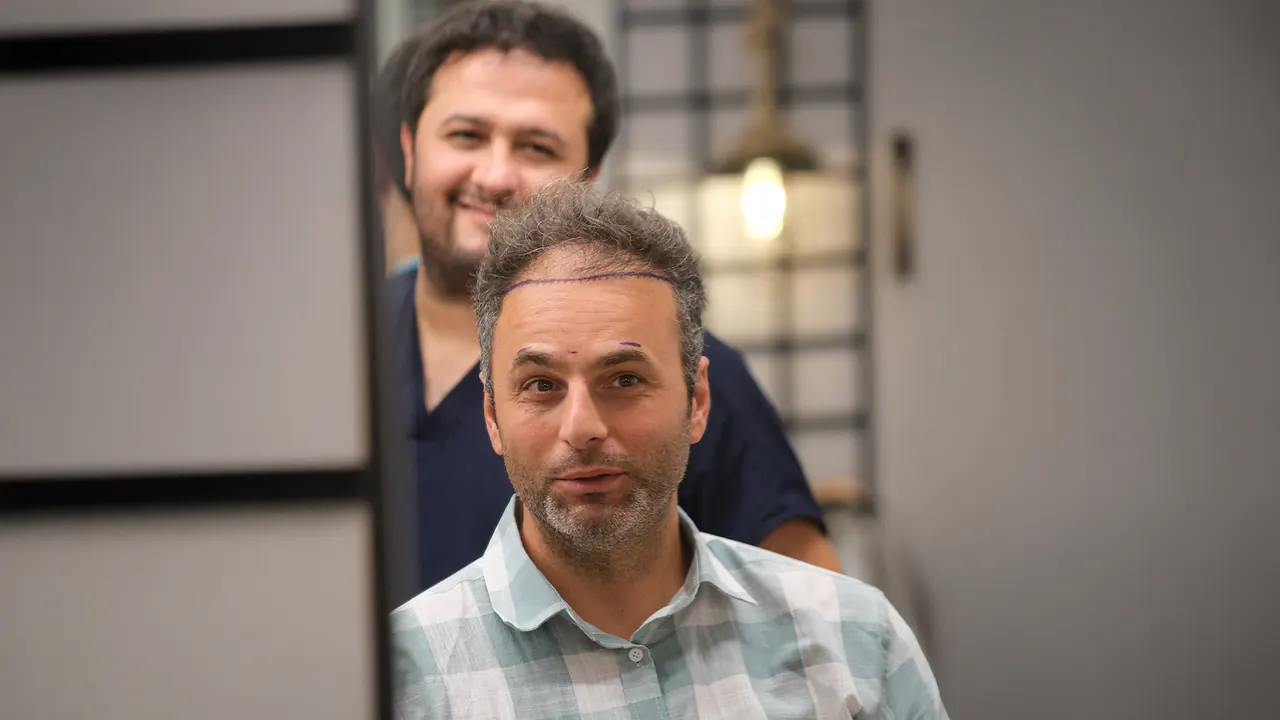
Dr. Harun Alakaya plans each case himself and checks the donor area before he gives a final plan. If you want to know what the operation feels like, read our guide on whether a hair transplant is painful. You can send clear photos of your front, top, crown, sides and back through the contact page for a free first assessment.
Frequently asked questions
Can I have a hair transplant if I have diabetes?
Often yes, if your blood sugar is well controlled and your doctor agrees. Poorly controlled diabetes slows healing and raises the risk of infection, so it should be managed first.
Is there an age limit for a hair transplant?
There is no strict lower or upper limit. Many surgeons prefer to wait until the mid-20s, when the pattern of loss is clearer. Older patients need a healthy donor area and good general health.
Can I get a hair transplant if I take blood thinners?
Possibly, but only with a plan made by your surgeon and the doctor who prescribed the medicine. Never stop or change a blood thinner on your own.
Can smokers have a hair transplant?
In most cases yes, but smoking reduces blood flow to the scalp and can slow healing. Most surgeons ask you to stop for a period before and after surgery. Ask your doctor how long.
Can I become a candidate later?
Yes. Many people become suitable once their hair loss stabilises, a health condition is under control or temporary shedding has settled.
Sources
- NHS – Hair transplant
- American Academy of Dermatology – A hair transplant can give you permanent, natural-looking results
- StatPearls (NCBI Bookshelf) – Hair Transplantation
- Mayo Clinic – Hair loss: diagnosis and treatment

Our articles explain hair transplant topics in plain language. They are general information and do not replace a consultation with a doctor.
About the doctor