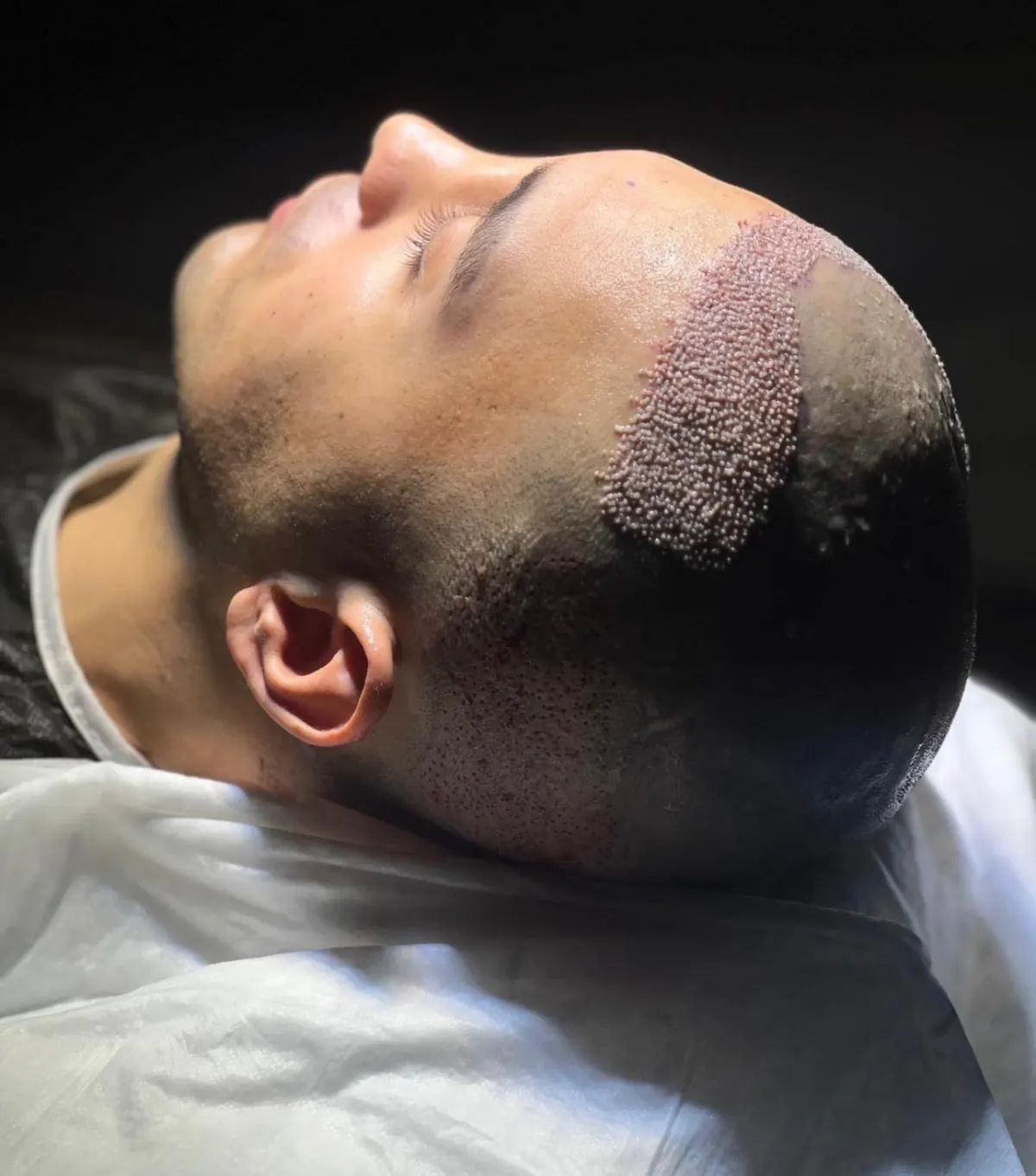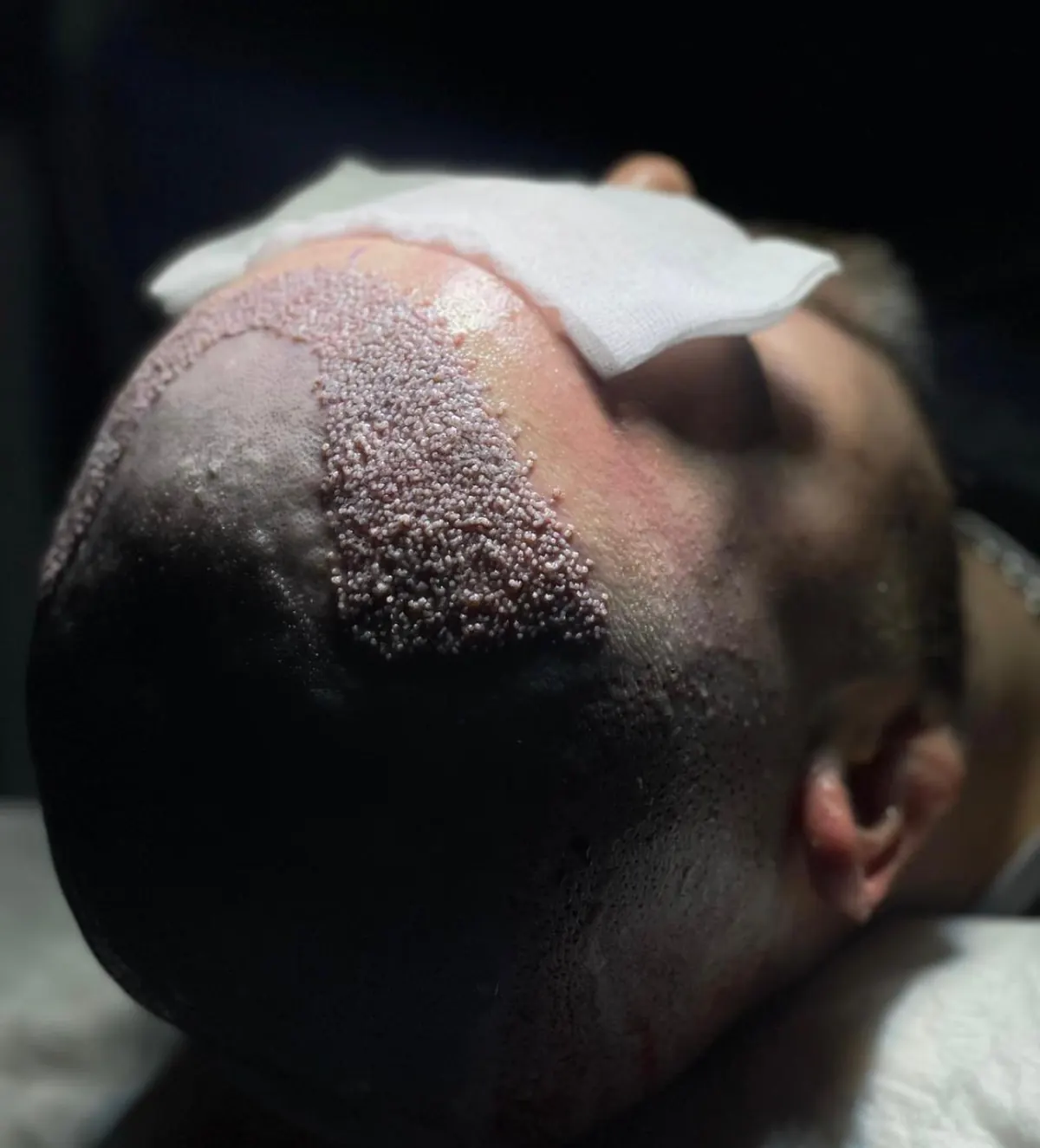
Hair transplant recovery timeline at a glance
Recovery after a hair transplant happens in two stages. The first is skin healing, which takes about two weeks. The second is hair growth, which takes about a year. Most patients feel well within a few days. The hair itself needs much more patience.
| Time | What usually happens |
|---|---|
| Day 1–3 | Mild tightness, some swelling, small scabs form |
| Day 3–7 | Swelling settles, gentle daily washing |
| Day 7–14 | Scabs soften and fall off, redness fades |
| Week 2–8 | Shock loss: transplanted hairs shed |
| Month 3–4 | First new hairs appear |
| Month 6 | Visible change, hair still thin and growing |
| Month 12 | Final result for most patients; crown can take up to 18 months |
Hair transplant recovery day by day: the first week
Day 1: the night after surgery
Your scalp may feel tight or numb. Mild pain is common and is usually controlled with the medication in your package. Sleep on your back with your head raised on two pillows or a travel pillow. This helps reduce swelling and protects the new grafts. Do not touch, scratch or rub the recipient area.
Day 2–3: swelling and the first check
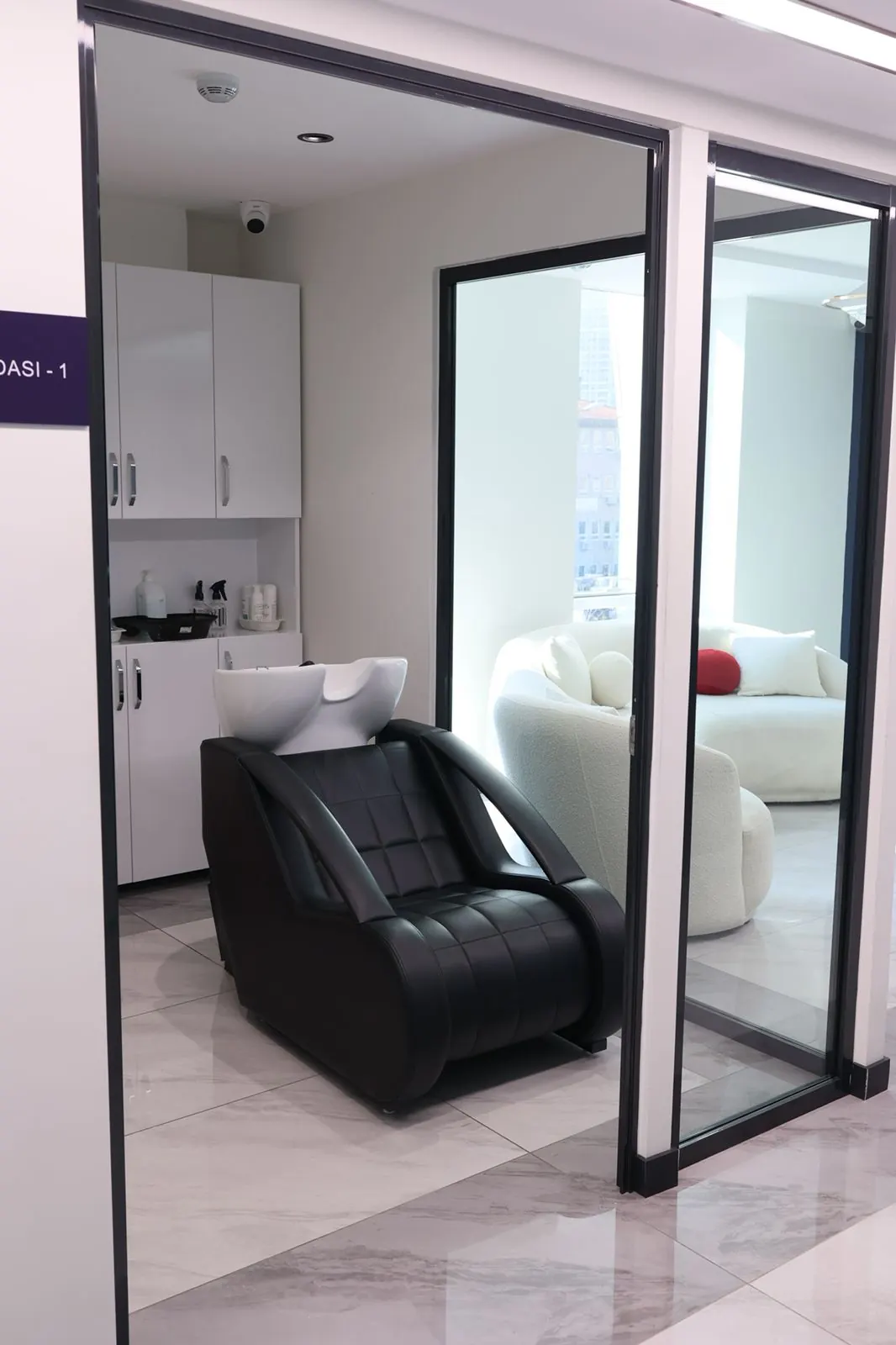
Some swelling on the forehead is normal. It can move down towards the eyes around day 3 or 4 and then fades. Keep your head raised when lying down, and avoid bending forward for long periods. In Istanbul, the first wash is done at the clinic, where the team shows you the method you will use at home.
Day 4–7: daily washing at home
Wash once a day as shown. Apply the lotion from your aftercare kit gently with your fingertips, let it soak, then rinse with lukewarm water from a cup or a low-pressure shower. Dab the donor area dry with a clean towel and let the recipient area air dry. Small scabs around each graft are normal. Do not pick them.
Most patients fly home within this window. Wear a loose hat if you like, avoid tight caps, and keep the recipient area away from headrests.
Flying home after a hair transplant
Flying a few days after surgery is usually fine. Bring a travel pillow so you can rest without pressing the recipient area against the seat. Keep your medication and aftercare kit in your hand luggage. Avoid lifting heavy bags above your head, and ask for help at the airport if you need it. Drink water during the flight. Once you are home, keep washing once a day exactly as you did in Istanbul.
Week 2: scabs fall off and redness fades
Between day 7 and day 14, washing becomes firmer. You can use gentle circular movements with your fingertips to help the scabs come off. By around day 10 to 14, most scabs are gone. The grafts are anchored by this point, so normal careful washing no longer moves them.
The recipient area is usually pink for a few weeks. Fair skin can stay pink longer. The donor area heals fast. With FUE, it leaves tiny dot scars that are usually hidden once the hair grows back.
Itching is common as the skin heals. Do not scratch. Your doctor can advise on what to use if it bothers you.
Back to work, exercise and daily life after a hair transplant
- Office work: usually after 3 to 7 days. With an unshaven hair transplant, many patients return sooner because the change is harder to see.
- Physical work: usually after about 2 weeks.
- Walking: light walks are fine from the first days.
- Gym and running: usually after 2 to 4 weeks. Start light.
- Swimming, sauna, steam room: usually after about 4 weeks.
- Contact sports: wait until your doctor approves it.
- Hats: a loose hat is fine early on; avoid tight caps and helmets for the first weeks.
- Sun: protect the scalp from direct sun for the first months.
- Haircut: scissors on the sides after about a month; clippers on the recipient area usually after a few months.
- Hair dye: usually after about 4 to 6 weeks, once the skin has fully healed.
Smoking and alcohol can slow healing. Most doctors ask patients to avoid them before surgery and in the first days after. Your exact instructions may differ, so follow the written plan you receive.
Shock loss after a hair transplant: weeks 2 to 8
Between weeks 2 and 8, most of the transplanted hairs fall out. This is called shock loss. It is a normal part of the hair growth cycle and is expected.
Each hair grows in phases: a growth phase (anagen), a short transition (catagen) and a resting phase (telogen). The stress of moving the follicle pushes most hairs into the resting phase, so the hair shaft sheds. The follicle stays alive under the skin and starts a new cycle.
Some patients also notice temporary thinning of existing hair near the transplanted area. This usually recovers in the following months. Between month 1 and month 3, your scalp may look much like it did before surgery. This is the hardest part for many patients emotionally. It is temporary.
Hair growth after a transplant: month 3 to month 12
Month 3–4: first new hairs
New hairs start to appear, usually thin and soft at first. Some may come through like small pimples. These usually settle on their own. Tell your doctor if one becomes painful or does not settle.
Month 6: visible change
Most patients see a clear change by month 6. The hair is still getting thicker and darker. Density keeps building over the next months.
Month 9–12: the result matures
Hair thickens, texture settles and the shape of the hairline is clear. For most patients the final result is seen around 12 months. The crown is often slower and can take up to 18 months.
Dr. Alakaya's package includes follow-up at 3, 6, 9 and 12 months. You can send photos from home if you cannot travel. See typical stages on the hair transplant before and after page.
Hair transplant aftercare tips for a smooth recovery
- Follow the washing method from your first wash exactly for the first two weeks.
- Sleep with your head raised for the first week.
- Do not touch, scratch or pick at the grafts or scabs.
- Take the medication as prescribed. Do not add other products without asking.
- Drink enough water and eat normally.
- Keep follow-up appointments, even when things look fine.
- Ask your doctor about medical therapy such as finasteride or minoxidil. Both need a doctor's assessment and prescription, and they are not right for everyone.
- Ask whether PRP hair treatment makes sense for you during recovery.
When to contact your doctor during recovery
Contact the clinic quickly if you notice any of these:
- Pain that gets worse after the first few days instead of better.
- Increasing redness, heat, pus or a bad smell.
- Fever.
- Bleeding that does not stop with light pressure.
- Swelling that keeps getting worse after day 5.
These problems are uncommon, and early contact makes them easier to manage. If you are still planning your trip, the hair transplant cost in Turkey page explains what the package covers, and the hair transplant FAQ answers common questions about travel and aftercare.
Frequently asked questions
How long does it take to recover from a hair transplant?
Most patients feel well within a few days and return to office work after 3 to 7 days. The skin usually heals in about two weeks, and the final hair result takes around 12 months.
When can I wash my hair after a hair transplant?
The first wash is usually done at the clinic one or two days after surgery. After that you wash once a day at home using the method the team shows you.
Is it normal for transplanted hair to fall out?
Yes. Shedding between weeks 2 and 8 is called shock loss and is expected. The follicles stay in place and new hair usually starts to grow at 3 to 4 months.
How should I sleep after a hair transplant?
Sleep on your back with your head raised for the first week. A travel pillow helps keep the recipient area away from the pillow.
When can I go to the gym after a hair transplant?
Light exercise is usually fine after 2 weeks and heavier training after about 4 weeks. Ask your doctor for your personal timeline.
When will I see the final result?
Most patients see the final result at around 12 months. The crown can take up to 18 months.