What is a sapphire FUE hair transplant?
A sapphire FUE hair transplant is a type of FUE hair transplant. FUE stands for follicular unit excision (often still called extraction). The surgeon removes hair follicles one by one from the back and sides of the head and moves them to thinning or bald areas. These small groups of one to four hairs are called grafts.
The word sapphire refers to the blade used to open the tiny channels where the grafts go. A sapphire blade is made from synthetic sapphire crystal. It is very sharp and has a smooth, polished edge. This lets the surgeon make finer, V-shaped incisions than a standard steel blade. Smaller incisions usually mean less trauma to the scalp, less scabbing and a quicker visible recovery.
Sapphire FUE is widely used in Turkey for both first-time patients and repair cases. Dr Harun Alakaya uses it for most patients who need a medium or large session, a new hairline or a fuller crown.
How sapphire FUE works, step by step
- Consultation and planning. Dr Alakaya looks at your hair loss pattern, your donor area and your hair type. He estimates how many grafts you need and checks that your donor area can supply them safely. He also takes your future hair loss into account, so grafts are kept in reserve if you need them later.
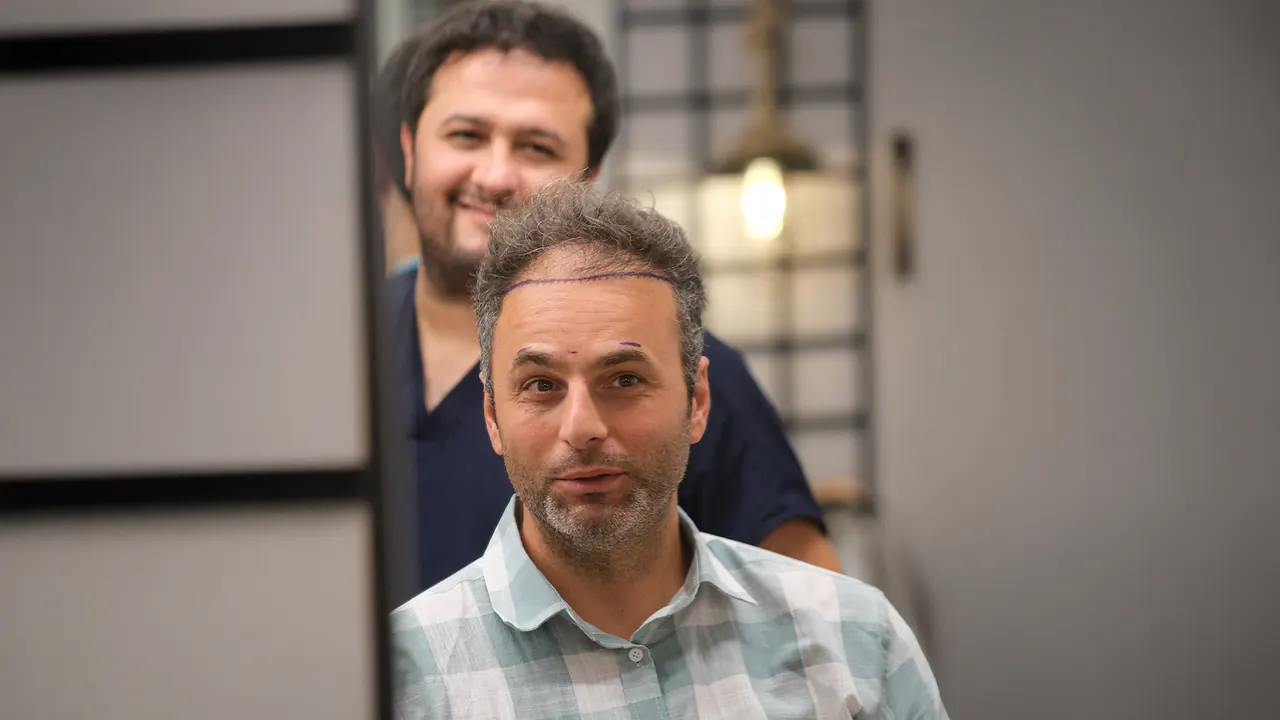
- Hairline design. He draws your new hairline by hand, based on your face shape, your age and the hair loss you may still have in the future. You see and approve the design before anything starts.
- Local anaesthesia. The donor and recipient areas are numbed. You stay awake and can rest, listen to music or talk during the operation.
- Graft extraction. Grafts are taken one at a time with a micro punch, usually less than 1 mm wide. They are counted, sorted by the number of hairs in each and kept in a cooled storage solution.
- Channel opening with sapphire blades. Dr Alakaya opens the recipient channels himself. He sets the angle, direction and depth of each channel so the new hair follows your natural growth pattern.
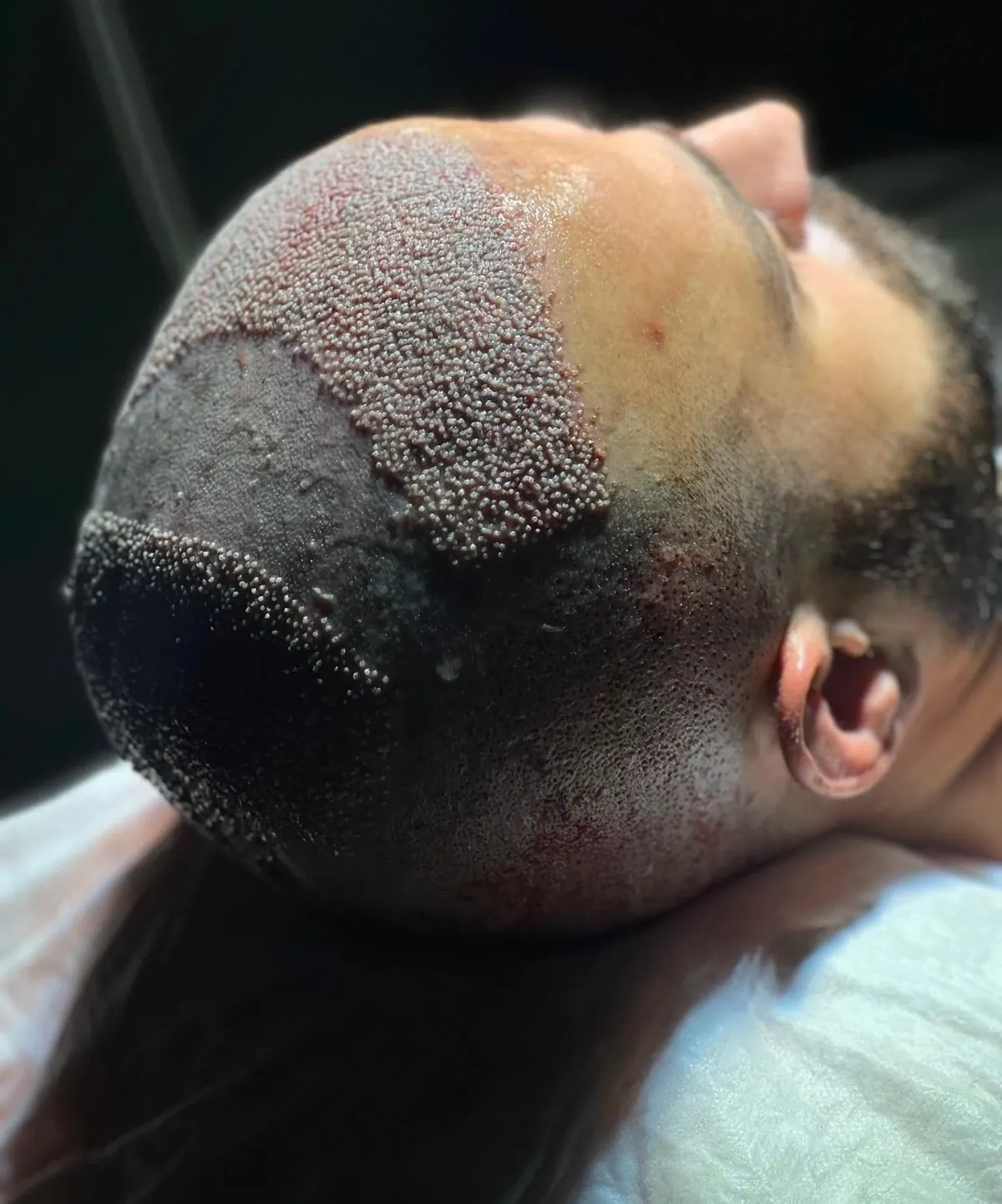
- Implantation. His certified team places the grafts into the channels under his supervision. Single-hair grafts go at the very front for a soft hairline. Grafts with more hairs go behind them to build density.
- Dressing and instructions. The donor area is dressed. You receive your medication, your aftercare kit and clear written instructions for the first days.
The operation usually takes 6 to 8 hours, with breaks for food and rest. Most patients describe it as a long but comfortable day once the anaesthesia has taken effect.
Sapphire blade vs steel blade in FUE
Both blades can give good results in skilled hands. The difference lies in the incision and how the scalp heals in the first weeks.
| Feature | Sapphire blade | Steel blade |
|---|---|---|
| Incision | Finer, V-shaped | Standard slit |
| Tissue trauma | Usually lower | Usually a little higher |
| Scabbing and redness | Usually settles faster | Can take a little longer |
| Placing grafts close together | Fine channels can sit closer together | Channels often need more spacing |
For you, this usually means less swelling and crusting in the first week and a neater recipient area by the time you go back to work. The blade does not replace skill. The angle and direction of each channel still decide how natural your hair looks.
Who is a good candidate for a sapphire FUE hair transplant
Sapphire FUE suits most men with male pattern hair loss who have a stable, healthy donor area. It is often a good fit if you:
- have a receding hairline or thinning at the temples
- have hair loss at the crown or across the top of the head
- need a medium or large number of grafts in one session
- are happy to have your head shaved for the operation
- want to repair an earlier transplant that looks thin or unnatural
It may not be the right first step if your hair loss is very active, if you are very young or if your donor area is weak. In these cases Dr Alakaya may suggest medical therapy first. Finasteride and minoxidil are common options, and both need a doctor's prescription. PRP hair treatment can also support the hair you still have.
If you do not want to shave your head, an unshaven hair transplant may suit you better. If you need high density in a small area, Dr Alakaya may also discuss a DHI hair transplant with you.
Sapphire FUE in Istanbul with Dr Harun Alakaya
Dr Harun Alakaya graduated from Istanbul University Faculty of Medicine in 2011 and has worked in hair surgery for about 15 years. He has performed more than 20,000 hair transplant operations. He is a member of the ISHRS (International Society of Hair Restoration Surgery) and the ESHRS (European Society of Hair Restoration Surgery).
A few steps decide how natural a sapphire FUE result looks. Dr Alakaya does these himself:
- Planning: he reviews every case and sets the graft plan personally.
- Hairline design: he draws the hairline by hand to suit your face.
- Channel opening: he opens the sapphire channels himself, which sets the angle and direction of every hair.
- Daily limit: he limits the number of patients per day, so each case gets his full attention.
His certified team carries out implantation under his supervision. You can read more about his training and work on the Dr Harun Alakaya profile page.
Sapphire FUE recovery and results timeline
Recovery after sapphire FUE is usually smooth. This is what most patients can expect:
- Days 1–3: mild tightness and some swelling of the forehead. Your first wash is done at the clinic.
- Days 3–5: most people with office jobs can go back to work.
- Days 7–10: the small scabs in the recipient area soften and come off with gentle washing.
- Weeks 2–8: many transplanted hairs shed. This is called shock loss. It is a normal part of the hair growth cycle and the roots stay in place.
- Months 3–4: new hair starts to grow, often fine at first.
- Months 6–9: the hair thickens and the change becomes clear.
- Month 12: the final result in most areas. The crown can take up to 18 months.
For detailed advice on washing, sleeping, exercise and sun protection, read our hair transplant recovery timeline.
Sapphire FUE hair transplant packages in Turkey
Every sapphire FUE package with Dr Alakaya has a fixed price. There is no per-graft billing, so the number of grafts does not change the price you agreed. The package includes:
- the sapphire FUE operation
- hotel accommodation
- VIP transfers between the airport, hotel and clinic
- blood tests before surgery
- medication
- an aftercare kit
- your first hair wash at the clinic
- follow-up at 3, 6, 9 and 12 months
Prices start from the figure shown on our hair transplant cost in Turkey page. Send a few photos of your hair for a personal plan and a fixed quote.
Frequently asked questions
Is sapphire FUE better than regular FUE?
Sapphire FUE uses the same extraction as regular FUE. The difference is the blade used to open the channels. Sapphire blades make finer incisions, which usually means less scabbing and faster visible healing.
Does a sapphire FUE hair transplant hurt?
The operation is done under local anaesthesia. Most patients feel the anaesthetic injections for a few minutes and little after that. Any discomfort in the following days is usually mild and eased with the medication you receive.
How many grafts can I get with sapphire FUE in one session?
It depends on your donor area and the size of the bald area. Many patients receive between 1,500 and 4,500 grafts in one session. The donor area typically supplies about 4,000–6,000 grafts over a lifetime, so Dr Alakaya plans with the future in mind.
Does sapphire FUE leave scars?
FUE leaves tiny dot scars in the donor area. They are usually hidden by the surrounding hair, even with a fairly short haircut.
When will I see results after sapphire FUE?
New hair usually starts to grow at 3–4 months. Most patients see a clear change by 6 months and the final result around 12 months. The crown can take up to 18 months.
Do I need to shave my head for sapphire FUE?
Sapphire FUE is usually done with the head shaved, which makes extraction and channel opening easier. If shaving is a problem for you, ask about an unshaven hair transplant.