How to wash hair after a hair transplant: the short answer
Washing after a hair transplant has one job: to keep the scalp clean while the grafts settle. Each wash removes dried blood and fluid before they build up into thick crusts. A 2026 pilot study on scab care after FUE notes that persistent scabs may delay healing, put grafts at risk and raise the chance of infection. Gentle, regular washing prevents that.
The method changes as you heal. A typical two-week washing plan looks like this:
| Period | How to wash |
|---|---|
| Operation day | No washing. Rest and do not touch the grafts. Use a spray only if your team gives you one. |
| Days 1–3 | First wash at the clinic, then at home as shown. Pour, soak and pat. |
| Days 3–7 | Same method, as often as advised. No rubbing on the recipient area. Light fingertip pressure on the donor area. |
| Days 7–10 | Let the lotion soak longer, then use gentle fingertip circles to loosen the scabs. |
| Days 10–14 | Slightly firmer circles until the last scabs are gone. Still no nails and no towel rubbing. |
| After about 2 weeks | Gradual return to normal shampoo and normal shower pressure, if your doctor agrees. |
Washing is one part of aftercare. For sleeping, swelling, work and the months of growth that follow, see our hair transplant recovery timeline.
When can I wash my hair after a hair transplant?
There is no single rule. Published guidance gives different start days, because techniques and clinic protocols differ:
| Source | First wash |
|---|---|
| StatPearls (medical reference) | About 24 hours after surgery, without rubbing |
| American Society of Plastic Surgeons | Gently, within two days |
| 2026 FUE scab study (Frontiers in Medicine) | 48–72 hours, supervised at the clinic |
| NHS (UK) | Gently by hand on day 6 |
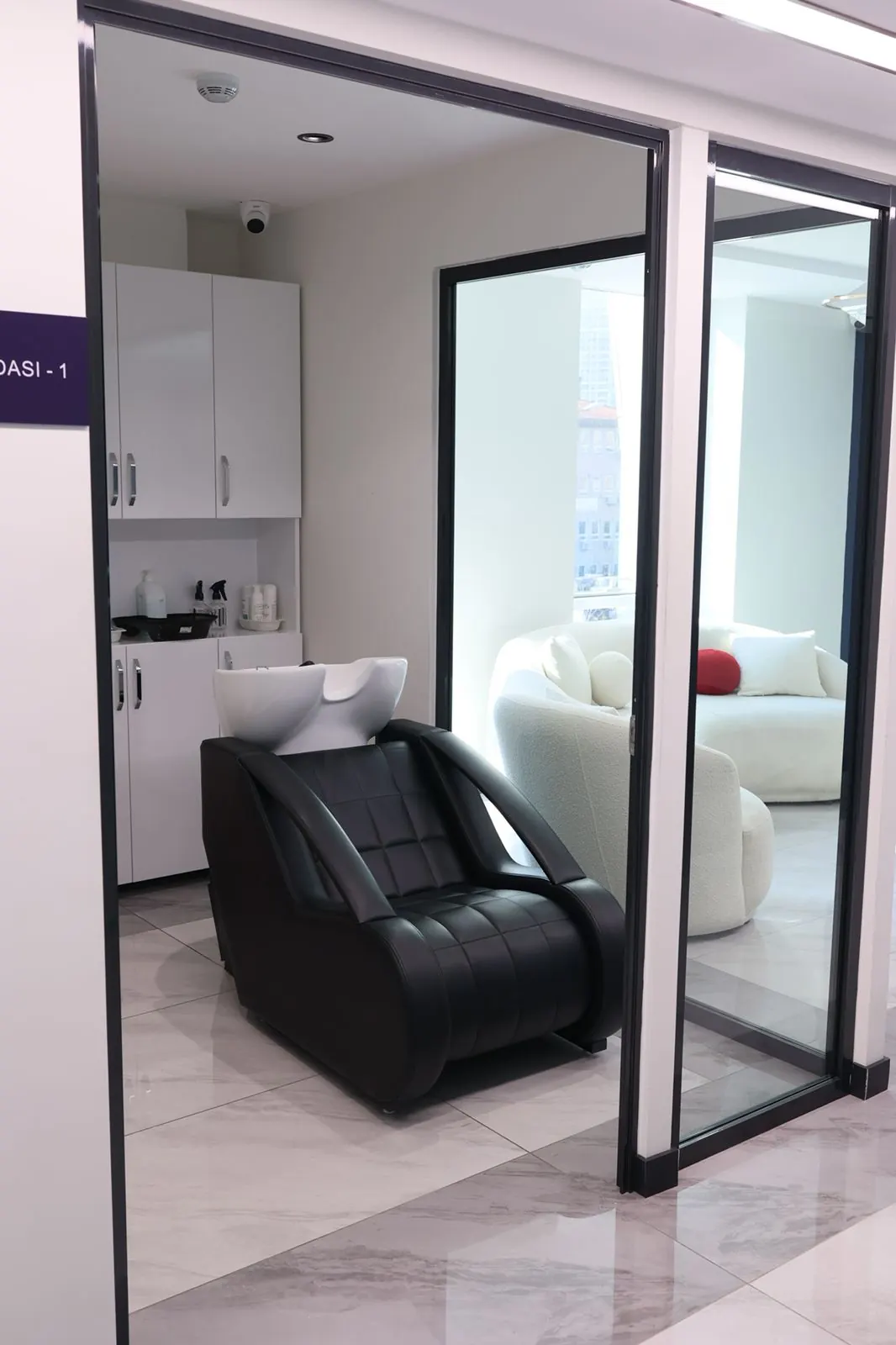
Many FUE protocols start in the first one to three days. In Dr. Harun Alakaya's package, the first wash is done at the clinic, usually a day or two after the operation. The team washes your scalp, shows you each step and gives you the products for home. If your surgeon gives a different start day, follow your surgeon.
What you need before washing at home
- The lotion or foam and the mild shampoo from your aftercare kit.
- A clean cup or small jug for pouring water.
- Lukewarm water. Test it on your wrist first.
- A clean, soft towel for the donor area only.
- Clean hands with short nails.
- A mirror, or a phone camera, to check for missed lotion.
Many patients find it easiest to wash in the shower while leaning slightly back, or at a basin while seated. Avoid putting your head under the bath tap or a strong shower jet.
Step by step: washing the recipient area in the first week
- Apply the lotion. Spread the lotion or foam from your kit over the recipient area with your fingertips. Dab it on. Do not rub or slide your fingers across the grafts.
- Let it soak. Leave it on for the time your team gives you. This softens dried blood and early crusts.
- Rinse. Pour lukewarm water from a cup over the area. A shower on very low pressure is fine if your clinic allows it.
- Shampoo. Make lather in your palms first. Pat it onto the recipient area. Do not massage.
- Rinse again. Pour water until all foam is gone. Leftover product can dry into flakes.
- Dry. Let the recipient area air dry. Never rub it with a towel.
- Check. Look for any bleeding points or missed lotion, and repeat as many times a day as your team advises.
Some protocols use one wash a day and others two. Rubbing harder or washing more often than advised does not speed healing.
How to wash the donor area after a hair transplant
The donor area at the back and sides of the head heals faster than the recipient area. It still needs care in the first days, because each extraction site is a tiny wound.
- Wash it at the same time, with the same shampoo.
- From the first days you can usually spread shampoo there with gentle fingertip pressure.
- Medical guidance describes gently rubbing the donor area to remove crusts from about day 5 to 7.
- Dab it dry with a clean towel. Do not scrub.
- Do not use the same towel on the recipient area.
Days 7 to 14: how to remove scabs after a hair transplant
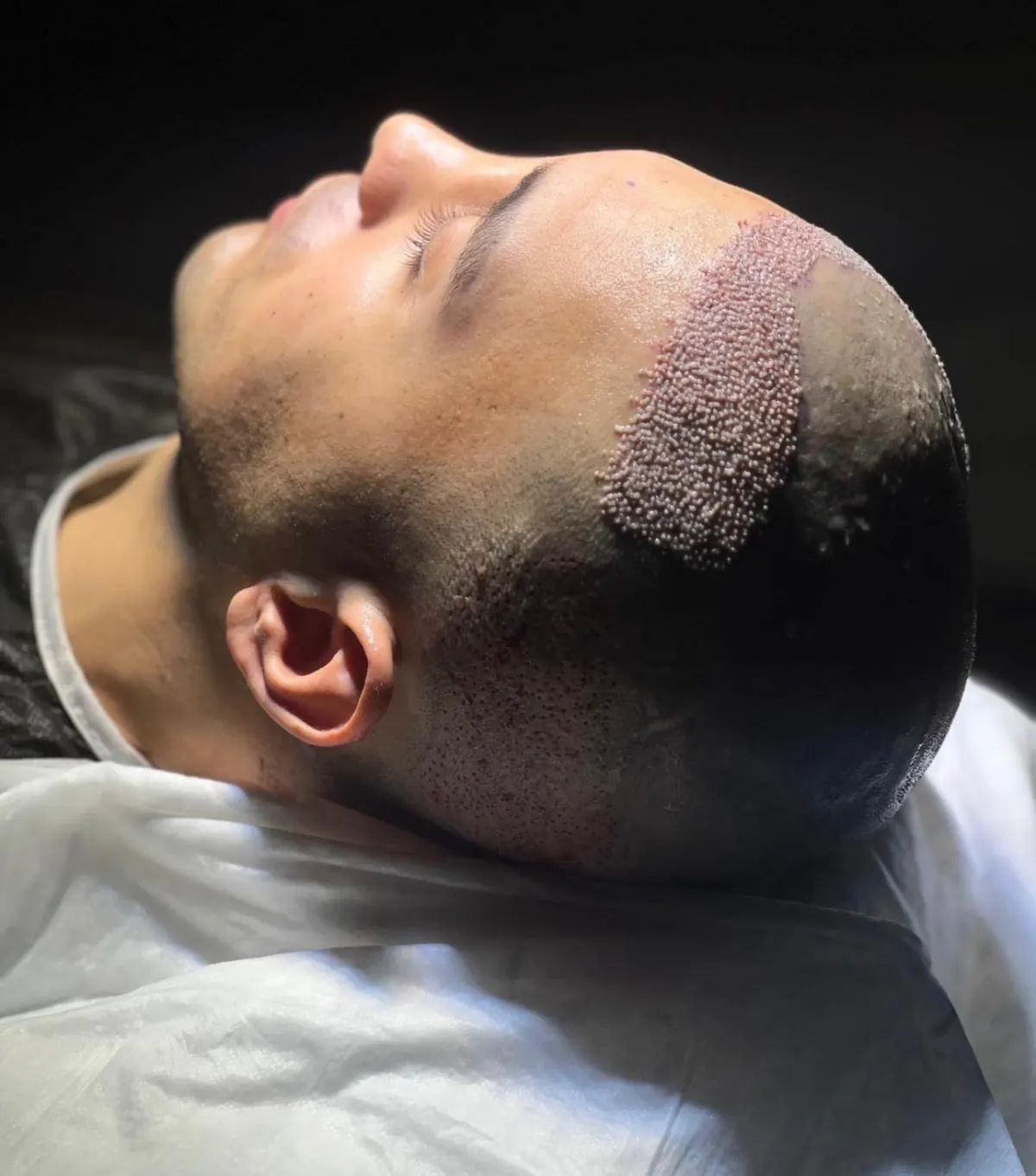
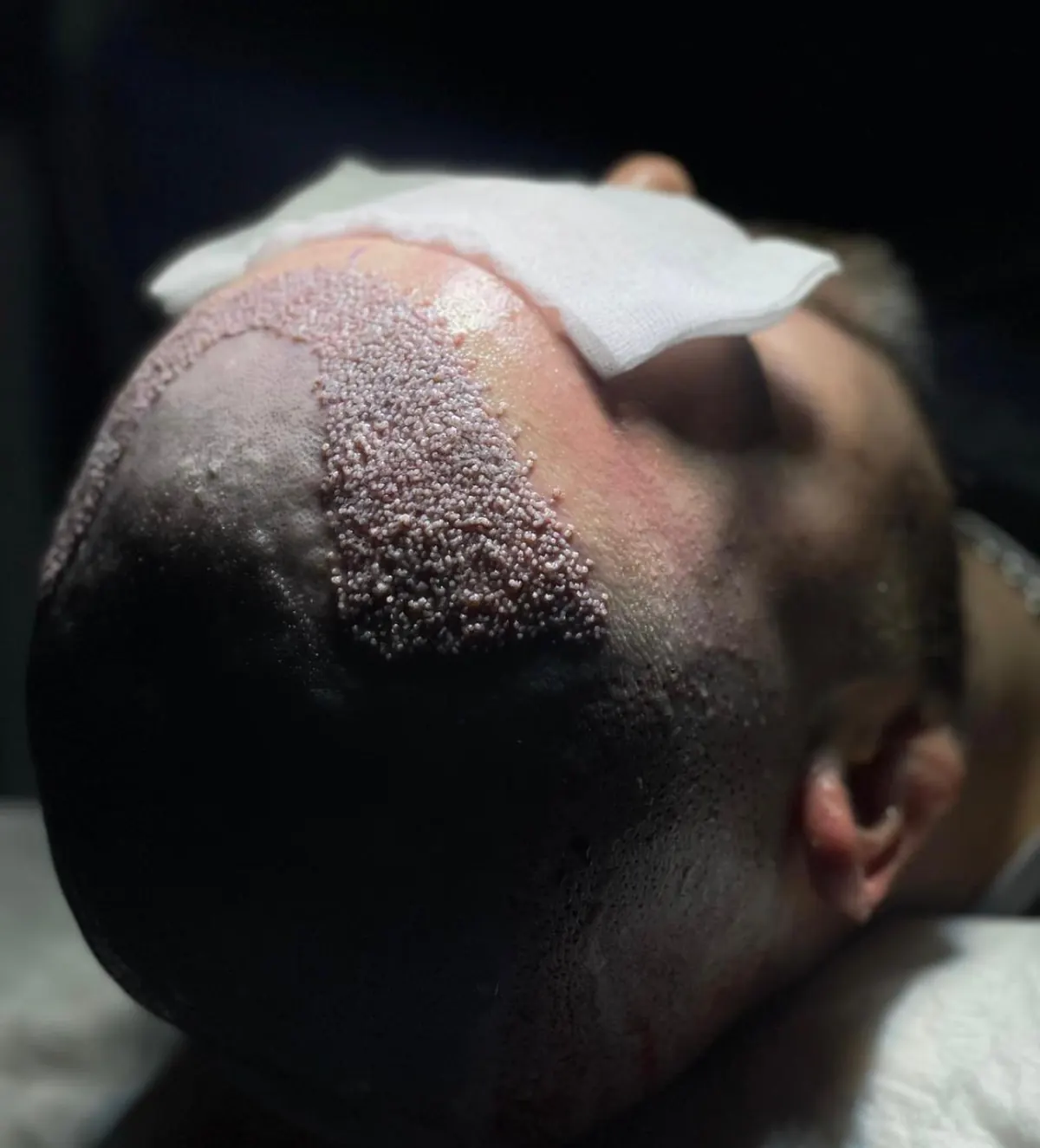
From about day 7, if your team agrees, washing can become firmer. In the 2026 study protocol, patients had a firmer wash at the clinic between days 7 and 10, then gradually increased the pressure at home until the scabs were gone. The aim is to let the scabs soften and slide off by themselves.
- Let the lotion soak a little longer before rinsing.
- Use gentle circular movements with the pads of your fingers, never your nails.
- Rinse well. Loosened scabs wash away with the water.
- Leave any scab that does not come off easily. Try again at the next wash.
The ISHRS notes that FUE scabs are usually gently rubbed away one to two weeks after surgery. If thick scabs remain after about two weeks, contact the clinic. Hard scabs are best handled by the medical team, who can soften and remove them without harming the grafts.
For a full picture of this week, see hair transplant aftercare in the first 10 days, day by day.
When can I use normal shampoo, a shower or a hair dryer?
| Question | Usual answer |
|---|---|
| Normal mild shampoo | After about two weeks, once the scabs are gone and your doctor agrees |
| Normal shower pressure on the scalp | After about two weeks; until then, a cup or very low pressure |
| Rubbing and massaging the recipient area | Gentle circles from about day 7; normal washing after about two weeks |
| Hair dryer | Air dry for the first two weeks; after that, a cool setting held at a distance |
| Swimming, sauna, steam room | Usually after about 4 weeks; ask your doctor first |
| Gel, wax, spray | After the skin has fully healed; ask at your follow-up |
| Hair dye | Usually after 4–6 weeks |
Your own timeline depends on the technique, graft number and how your skin heals. If in doubt, send the clinic a photo and ask.
Washing longer hair after an unshaven or female hair transplant
When the existing hair is left long, washing needs extra care. Long hair can trap lotion, shampoo and small crusts close to the grafts.
- Part the hair with your fingertips so the lotion reaches the scalp.
- Rinse longer than you think you need to. Leftover product can dry into flakes.
- Do not brush or comb over the recipient area in the first days.
- Let the hair hang loose while it dries. Avoid tight ponytails, clips and buns.
- Do not use a hot hair dryer, straightener or curling iron until your doctor says so.
Read more about the unshaven hair transplant and the female hair transplant, where long hair is common.
Common washing mistakes and when to call your doctor
- Using hot water, which irritates healing skin.
- Rubbing the recipient area with a towel.
- Picking or scratching scabs to speed things up.
- Skipping washes, which lets thick crusts build up.
- Switching to your own shampoo or styling products too early.
- Standing under a strong shower jet in the first week.
Is it normal to see hairs in the water?
Yes, from about the second week. Short hairs come away with the scabs, and between weeks 2 and 8 most transplanted hairs shed. This is shock loss, and the follicles stay in place. In the first few days, a graft that comes out usually leaves a small bleeding point. Press gently with clean gauze and contact the clinic.
Also call your doctor if you notice fever, spreading redness, pus, worsening pain or bleeding that does not stop with light pressure.
Aftercare support with Dr. Harun Alakaya
The package includes an aftercare kit, the first wash at the clinic and follow-up at 3, 6, 9 and 12 months. You can send photos from home whenever you are unsure about a wash or a scab. If you are planning a hair transplant, send photos of your scalp through the contact page for a free analysis.
Frequently asked questions
What happens if I skip a wash after a hair transplant?
Missing one wash is rarely a problem. Skipping several lets blood and fluid dry into thick crusts that are harder to remove, so return to your routine and contact the clinic if crusts become thick.
Can I use baby shampoo after a hair transplant?
Use only what your clinic gives or approves in the first two weeks. If you run out of the shampoo in your kit, ask before switching to another product.
Should the water be hot or cold?
Use lukewarm water. Hot water can irritate the healing skin and increase redness, and very cold water is uncomfortable on a sensitive scalp.
Can washing make my grafts fall out?
Gentle washing as shown at the clinic is very unlikely to dislodge grafts. In the first days, the risk comes from rubbing, scratching or picking at scabs.
When can I wash my hair normally after a hair transplant?
Most patients return to normal washing after about two weeks, once the scabs are gone. Your doctor confirms this at your check or from your photos.
Sources
- StatPearls (NCBI Bookshelf) – Hair Transplantation
- Meyer T et al. Early removal of post-operative scabs after follicular unit extraction using a 2% salicylic acid keratolytic shampoo: a multicentre descriptive pilot study. Front Med, 2026 (PMC)
- ISHRS – Guide to FUE Hair Transplant: Benefits, Process & Recovery
- NHS – Hair transplant
- American Society of Plastic Surgeons – Hair Transplant Recovery
Our articles explain hair transplant topics in plain language. They are general information and do not replace a consultation with a doctor.
About the doctor