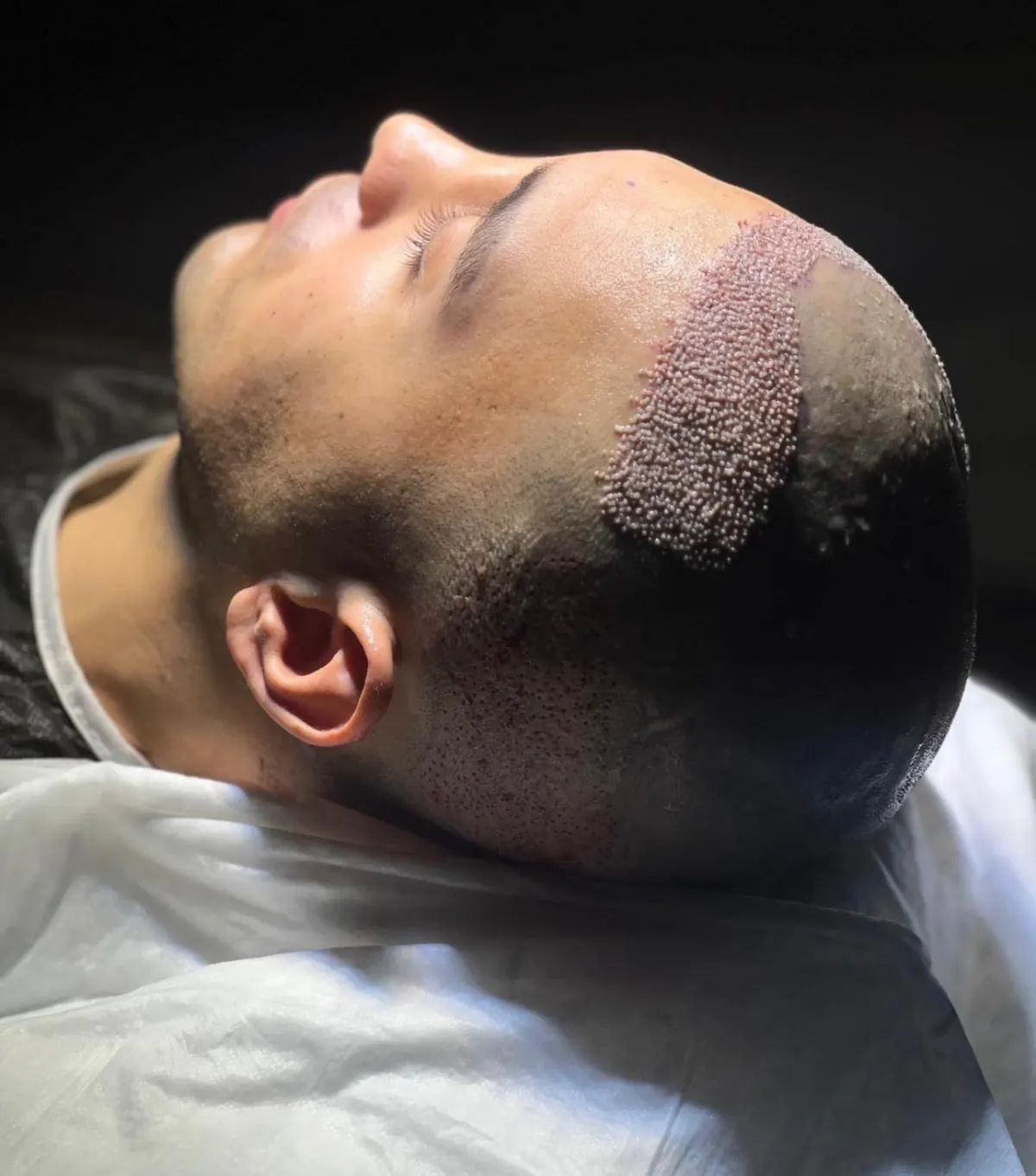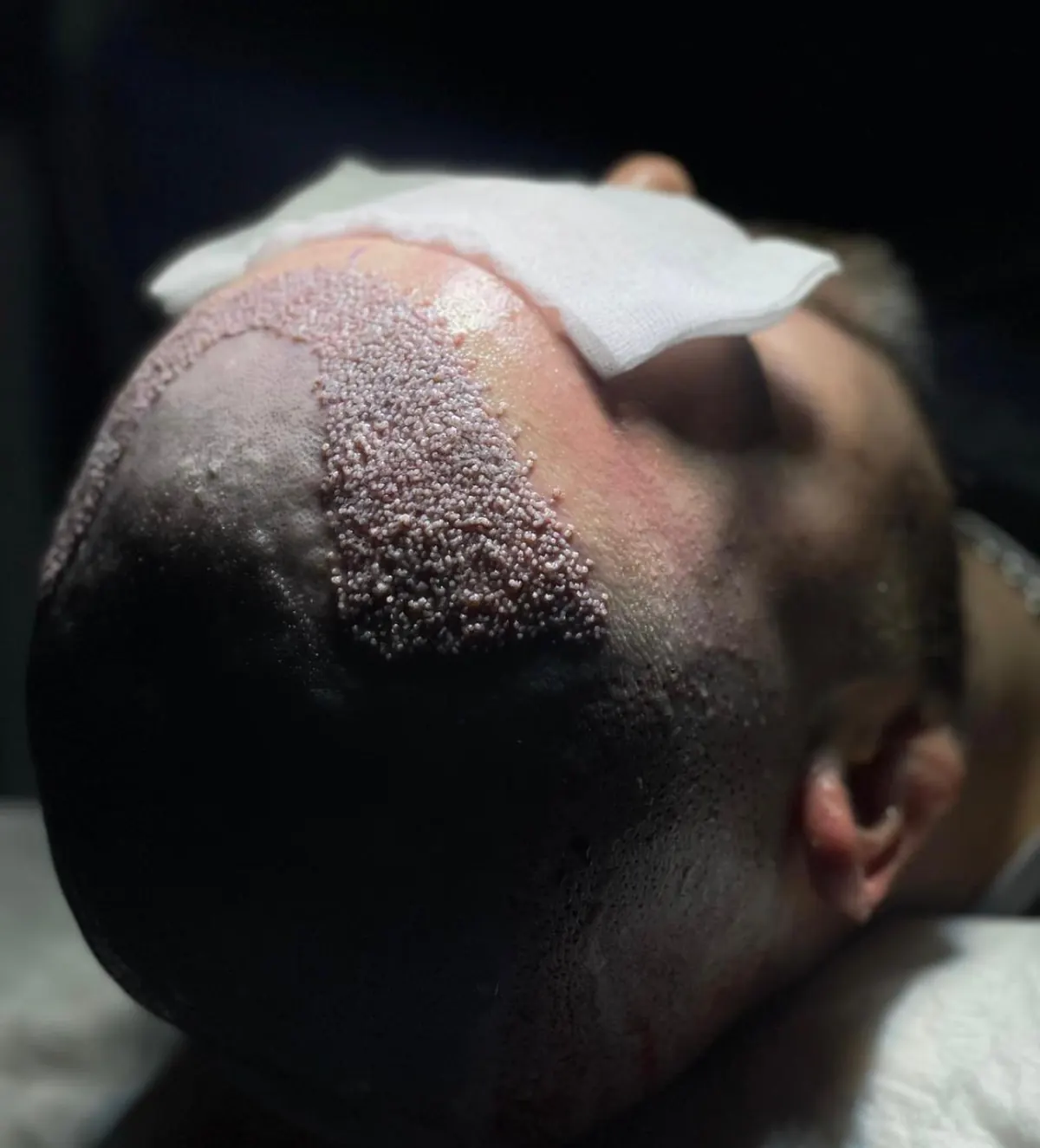
Smoking and alcohol after a hair transplant: the short answer
Do not smoke or drink alcohol in the first 3 days after a hair transplant. Keep avoiding both for at least the first week, and ideally for two weeks, until the grafts are anchored. For smoking, longer is better: StatPearls, a medical reference for doctors, advises stopping 3 to 6 weeks before surgery and staying smoke-free for the same time afterwards.
The reason is simple. Each graft is a tiny piece of skin with one or more hair follicles. For the first days it has no blood vessels of its own. It survives on oxygen and nutrients from the surrounding tissue until new small vessels grow in. Anything that cuts blood flow or causes bleeding in this window can harm the grafts. Smoking and alcohol both do this, in different ways.
| Smoking | Alcohol | |
|---|---|---|
| Before surgery | Ideally stop 3–6 weeks before; at the very least 2–3 days | None for at least 3 days; some surgeons ask for longer |
| Days 0–3 | None | None |
| Days 4–14 | Avoid | Avoid, and always while on medication |
| Weeks 3–6 | Best avoided | Moderate amounts usually fine if your doctor agrees |
These are common guidelines. Your surgeon's written instructions come first. The rest of the aftercare routine is on our hair transplant recovery timeline.
How smoking affects hair transplant healing
Nicotine narrows blood vessels. Carbon monoxide from smoke reduces the amount of oxygen your blood can carry. Together they mean less oxygen reaches healing skin, which is why smokers heal more slowly after any kind of surgery.
Evidence from surgery in general points the same way. A large review of 140 cohort studies found that smokers had 1.79 times the odds of a surgical site infection and 3.60 times the odds of necrosis of wounds and tissue flaps (death of a small area of tissue) compared with non-smokers. In the trials it included, helping patients stop smoking before surgery lowered the infection risk, and the author recommends stopping at least four weeks before an operation. Many of the studies were of limited quality, so the exact figures are uncertain, but the direction is consistent.
Research on hair transplants specifically is more limited. A published review of transplant complications reports small patches of necrosis in the recipient area in patients who smoked, lists heavy smoking as a risk factor for necrosis and lists smoking as a risk factor for shedding in the donor area. Those patches healed on their own, but they show why surgeons take smoking seriously.
Smoking does not mean your transplant will fail. It raises the risk of healing problems, and the risk is higher in heavy smokers and in the first days after surgery.
When can I smoke after a hair transplant?
| Time | Advice | Why |
|---|---|---|
| 3–6 weeks before surgery (earlier is even better) | Best time to stop | Gives blood flow and healing time to recover |
| 2–3 days before surgery | Minimum if you cannot stop earlier | Carbon monoxide and nicotine clear from the body within days, which lowers some risks |
| Day of surgery to day 3 | No smoking at all | Grafts are most fragile and depend on nearby blood flow |
| Days 4–14 | Keep avoiding | Grafts anchor by around day 10–14; scabs and small wounds are still healing |
| Weeks 3–6 | Avoid if you can | StatPearls advises the same smoke-free time after surgery as before it |
| After 6 weeks | The main healing period is over | Quitting for good is still the best choice for your health |
Some surgeons ask for one smoke-free week, others for a month. If you cannot stop completely, cutting down helps, but the first 3 days matter most. Our guide to the first 10 days after a hair transplant shows what else happens in this period.
Vaping, nicotine patches and shisha after a hair transplant
- E-cigarettes and vapes. Most contain nicotine, which narrows blood vessels. Treat a nicotine vape like a cigarette during healing.
- Nicotine patches and gum. These avoid smoke and carbon monoxide, which is better, but they still deliver nicotine. Some doctors accept them as a way to stop smoking. Ask your surgeon before using them around your operation.
- Shisha (hookah). Shisha is tobacco smoke with carbon monoxide, and one session often lasts a long time. Shisha cafés are common in Istanbul. Treat shisha the same as cigarettes.
- Other people's smoke. In the first days, avoid sitting for long in smoky rooms or cars.
How alcohol affects recovery after a hair transplant
Alcohol affects healing in a few ways. It widens blood vessels and can reduce how well blood clots, which can mean more bleeding and swelling in the first days. It also dehydrates you and disturbs sleep, and the body needs both water and rest to heal.
Medicines are the second reason. After surgery most patients take painkillers, and some take antibiotics or other medicines prescribed by their doctor. The NHS advises avoiding alcohol when you take medicine or feel unwell. With some antibiotics, such as metronidazole, alcohol must be avoided completely during the course and for 48 hours after it ends. Always check with your doctor or pharmacist before drinking while on any medicine.
The third reason is practical. In the first nights you need to sleep on your back with your head raised and keep the grafts away from pillows, headrests and door frames. After a few drinks it is easy to roll over in your sleep or bump your head.
StatPearls lists excessive alcohol use among the conditions that make hair transplantation more difficult. It advises no alcohol for 3 days before surgery.
When can I drink alcohol after a hair transplant?
| Time | Advice |
|---|---|
| At least 3 days before surgery (some surgeons ask for longer) | No alcohol |
| Day of surgery to day 3 | No alcohol |
| Days 4–7 | Avoid, especially while you take painkillers or antibiotics |
| Days 8–14 | Some surgeons allow a small drink once you have finished your medicines. Ask first |
| After 2 weeks | Moderate drinking is usually fine once healing is complete |
There is little research on alcohol and hair transplants specifically, so these timings follow common surgical advice. Heavy drinking is never good for healing, at any stage. The same careful approach applies to the gym; see when you can exercise after a hair transplant.
Planning your Istanbul trip around smoking and alcohol
Many patients combine their hair transplant with a few days in Istanbul. A little planning makes the rules easy to follow:
- Stop smoking at home, before you fly. Quitting on arrival, in a new city, is much harder.
- Skip drinks on the flight in and the night before surgery. Arrive rested and well hydrated.
- Plan your evenings without alcohol. A Bosphorus dinner is just as good with water or tea in the days after surgery. Save a celebratory drink for when you are home and past the first two weeks.
- Avoid shisha cafés. They are part of the city, but they are smoke-filled rooms.
- Fly home sober. You need to stay alert to protect the grafts from headrests and overhead lockers, and you may still be taking medicines.
If you have any question during your stay, ask the team. Dr. Alakaya's packages include medication, an aftercare kit and the first wash, so you leave knowing the routine. The wash itself is explained in our guide on how to wash your hair after a hair transplant.
Use your hair transplant as a reason to quit smoking
The weeks around surgery are a good moment to stop smoking for good. You already have a clear reason and a fixed date. Tell your doctor honestly how much you smoke and drink at your consultation. It rarely rules out surgery, and it helps the team plan your care.
Free support is available in many countries. In the UK, local NHS stop smoking services offer advice, and your GP or pharmacist can tell you about stop smoking medicines. Any medicine for quitting should be chosen with a doctor.
Better blood flow also helps the hair you already have. Smoking is listed as a risk factor for shedding after surgery, which you can read about in our guide on shock loss after a hair transplant.
When to contact your doctor
Contact your doctor or the clinic straight away if you notice:
- bleeding that does not stop after 10 to 15 minutes of gentle pressure with clean gauze
- dark or black patches in the recipient area that look different from normal small scabs
- fever, spreading redness, swelling that keeps getting worse, pus or severe pain
- grafts that seem to have come out, with fresh bleeding at the spot
If you smoked or drank earlier than advised, do not panic. Tell the clinic and send clear photos so they can check the grafts. If you are planning a transplant and want advice that fits your habits and health, send your photos for a free analysis through our contact page.
Frequently asked questions
Can I smoke 24 hours after a hair transplant?
It is best not to. The first days are when grafts depend most on good blood flow, and many surgeons ask for no smoking for at least the first week.
Can I have one beer after a hair transplant?
Not in the first days and not while you take prescribed medicines. Some surgeons allow a small amount after the first week or two if healing is going well, so ask your doctor first.
Should I tell my surgeon that I smoke or drink?
Yes. Honest answers help the team plan your operation and aftercare. Smoking or drinking rarely rules out a hair transplant, but it can change the advice you receive.
Does smoking affect hair transplant results long term?
Smoking matters most during healing, when grafts need good blood flow. Once the grafts have grown, the main reasons to stay smoke-free are your general health and the circulation in your skin.
Is passive smoking a problem after a hair transplant?
There is little research on this. In the first days it is sensible to avoid long periods in smoky rooms, cars or shisha cafés.
Sources
- StatPearls (NCBI Bookshelf) – Hair Transplantation
- Sørensen LT. Wound healing and infection in surgery: the clinical impact of smoking and smoking cessation. Arch Surg, 2012 (NCBI Bookshelf summary)
- Garg AK, Garg S. Complications of Hair Transplant Procedures: Causes and Management. Indian J Plast Surg, 2021 (PMC)
- Torbay and South Devon NHS Foundation Trust – Stop before your op
- NHS – Antibiotics: interactions
Our articles explain hair transplant topics in plain language. They are general information and do not replace a consultation with a doctor.
About the doctor