When can I exercise after a hair transplant: the short answer
Most people can go for gentle walks from the day after a hair transplant. Light cardio usually restarts after about two weeks, once the small scabs have fallen off. The gym, running and moderate weights usually follow between two and four weeks. Swimming, saunas and contact sports usually wait at least four weeks.
These are typical ranges. Your own timing depends on the technique, the number of grafts, how your scalp heals and the sport you do. Medical sources give similar guidance. The American Society of Plastic Surgeons says patients may be told to avoid vigorous exercise and contact sports for at least three weeks, because strenuous activity increases blood flow to the scalp. The NHS says you may be asked to limit exercise for the first month. For the full picture of healing from the first night to month twelve, see our hair transplant recovery timeline.
Exercise after a hair transplant: timeline by activity
The table shows when most patients return to common activities after an FUE hair transplant. Treat each row as the earliest point. Move to the next step only if the previous one felt fine.
| Activity | Usually from | What to watch |
|---|---|---|
| Gentle walking | Day 1–2 | Short, easy walks. Stay out of strong sun. |
| Brisk walking, light stretching | Around day 7 | Keep your head above your heart. |
| Exercise bike, cross-trainer, easy jogging | Around week 2 | Keep it light. Stop if the scalp throbs. |
| Light weights and machines | Weeks 2–3 | Lower loads, steady breathing, no straining. |
| Running, HIIT, heavy lifting | Weeks 3–4 | Build up over one to two weeks. |
| Cycling with a helmet | Weeks 3–4 | Loose, ventilated helmet that does not press on grafts. |
| Yoga inversions, headstands | About week 4 | No pressure on the transplanted area. |
| Swimming in a pool or the sea | About week 4 | Scalp fully healed, no open spots or crusts. |
| Sauna, steam room, Turkish bath | About week 4 | Strong heat only on fully healed skin. |
| Football, boxing, martial arts, rugby | Week 4 or later | Only after your doctor approves. |
Physical jobs follow similar rules. Most people in manual work return after about two weeks. Until the scalp has healed, they avoid heavy lifting and dusty or very hot conditions where possible.
Why the first 10 days after a hair transplant matter most
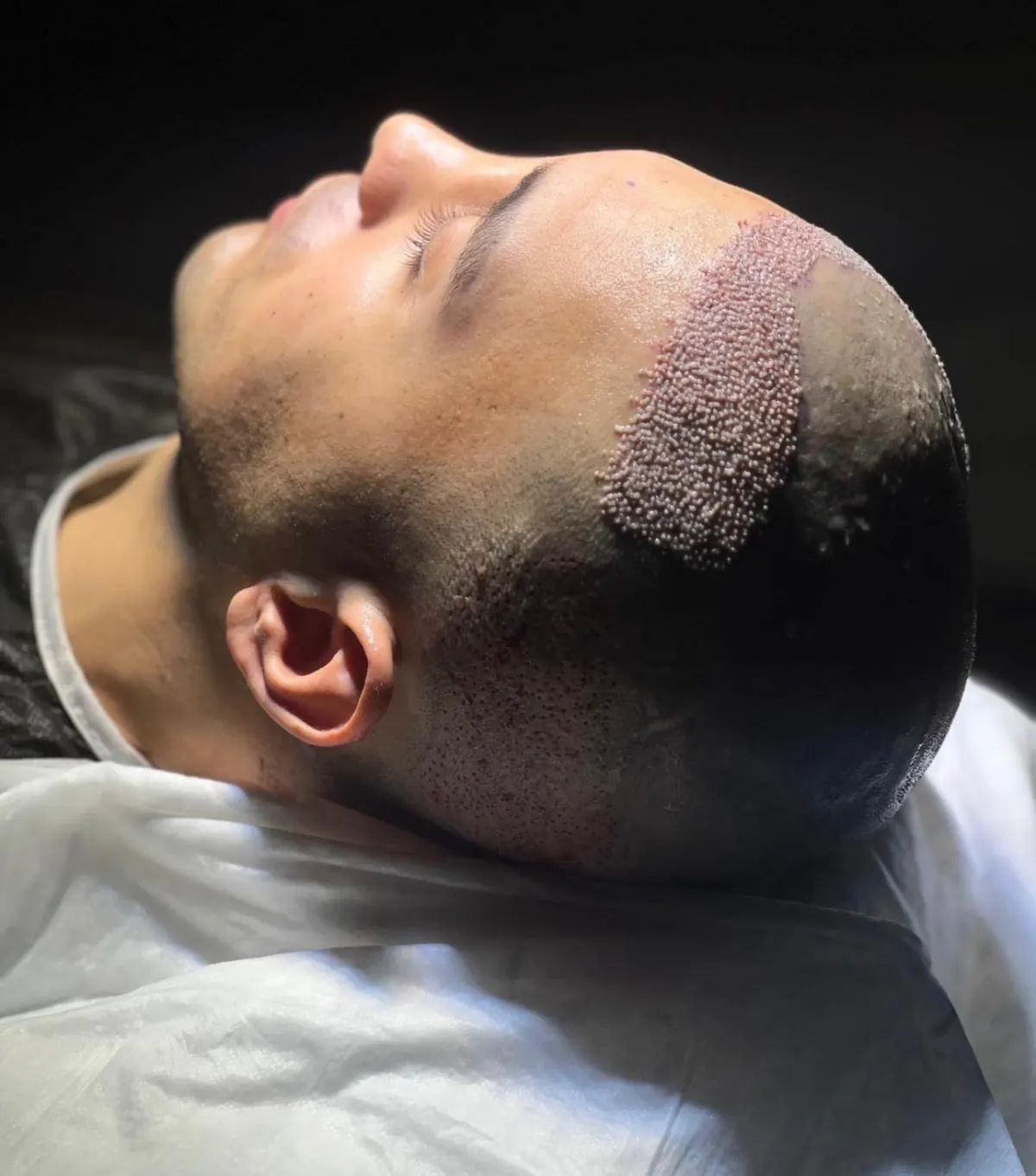
Right after surgery, each graft sits in a tiny channel in the skin. Over the next days the skin closes around it and the graft connects to the blood supply. Most clinics treat grafts as secure after about ten days, when the small crusts have usually fallen off. Until then, a few things can disturb them.
- Higher blood pressure. Hard effort raises your heart rate and blood pressure. In the first days this can cause oozing from the tiny wounds and more swelling.
- Heavy sweating. Sweat and the bacteria on the skin can irritate fresh wounds. The Aesthetic Society lists inflamed or infected hair follicles among the risks of hair transplantation. A clean, calm scalp lowers that risk.
- Bending the head down. Head-down positions push fluid towards the forehead and can make swelling worse in the first week.
- Friction and knocks. Caps, helmets, towels, a ball or another player's elbow can rub or knock out grafts before they are anchored.
This is why the first ten days are for rest and gentle walking. Our guide to the first 10 days after a hair transplant covers washing, sleeping and daily care in that window.
Going back to the gym after a hair transplant
Cardio
Start with low-intensity cardio such as an exercise bike, a cross-trainer or brisk walking on a treadmill, usually around week two. Keep your breathing comfortable and avoid getting very hot and red in the face. If your scalp feels normal afterwards, add a little intensity over the following week.
Weight training
Heavy lifting makes many people hold their breath and strain. That raises pressure in the head. In weeks two and three, use lighter weights, more repetitions and steady breathing. Avoid exercises that put your head below your hips, such as decline bench work or deep forward bends. Squats, deadlifts and presses near your maximum usually wait until about week four.
Sweat and washing after a workout
Once the scabs have gone, sweat does not usually harm transplanted hair. Wash your hair gently after training with the shampoo and method your clinic showed you. Do not scratch or rub the recipient area with a towel. Pat it dry instead.
Caps, headbands and helmets
Avoid anything tight on the head in the first weeks. A sweatband or tight cap can rub the grafts and trap heat. A loose hat that does not press on or rub the grafts is usually allowed within the first week to protect the scalp from the sun. Ask your clinic when you can start. Sport helmets should wait until your doctor confirms the scalp has healed, usually around weeks three to four.
Swimming, sauna and Turkish bath after a hair transplant
Water sports and heat need more patience. Pool water contains chlorine, sea water contains salt, and both can carry bacteria. Soaking a scalp that still has small wounds or crusts raises the risk of irritation and infection. Saunas, steam rooms and the Turkish bath (hamam) add strong heat and heavy sweating, which can increase redness and swelling.
Most surgeons advise waiting about four weeks for swimming, saunas and steam rooms. By then the skin is usually fully closed. If you swim outdoors, protect the scalp from strong sun with a hat, or with sunscreen once your doctor allows it. Sunburn on a healing scalp can keep it red for longer.
Contact sports and activities with head impact
Football with headers, boxing, wrestling, martial arts, rugby and basketball all carry a risk of knocks to the head. A blow in the early weeks can damage grafts and the donor area. Most doctors ask patients to wait at least four weeks, and longer for sports with repeated head contact. Ask your surgeon before you return to sparring or full matches.
The donor area also needs time. After FUE, the method used in sapphire FUE hair transplant and DHI, the donor area has many tiny round wounds that usually close within one to two weeks. After FUT (strip surgery) there is a stitched linear wound. The ISHRS notes that downtime is usually shorter after FUE than after FUT, and FUT patients are often asked to wait longer before heavy lifting to protect the scar.
Planning exercise when you travel to Istanbul for a hair transplant
Many international patients spend two to four days in Istanbul. During that stay, skip the hotel gym, the pool and the hamam. Easy walking is fine. Keep sightseeing slow, avoid steep hills in the heat and stay out of strong midday sun. Drink plenty of water.
Plan your training break before you book. If you have a race, a tournament or a beach holiday in the four weeks after surgery, mention it during your consultation so the date can be planned around it. Our guide on how to prepare for a hair transplant lists what to arrange before you travel. Smoking and drinking also affect healing in the same weeks, so read our advice on smoking and alcohol around a hair transplant too.
Signs you exercised too soon and when to call your doctor
A little tightness or mild throbbing after your first workouts can happen. It usually settles with rest. Stop and contact your clinic if you notice any of the following:
- Bleeding that does not stop with gentle pressure from clean gauze.
- A graft that has come out. In the first days this often shows as a small bleeding spot, with a tiny hair on the towel or pillow.
- Swelling that gets worse instead of better.
- Redness that spreads, warmth, pus or many painful spots.
- Fever or severe pain.
Losing hairs between weeks two and eight is usually shock loss, the normal shedding of transplanted hair shafts. The roots stay in the skin, and new hair usually starts to grow at three to four months. Shedding in this period is not a sign that exercise damaged your grafts.
How to return to exercise safely after a hair transplant
- Follow your clinic's written aftercare plan. It overrides any general timeline.
- Begin each new activity at about half your usual intensity.
- Move up one step at a time, for example from the bike to jogging, then to running.
- Keep your head above your heart for the first two weeks.
- Once you are allowed to, wash gently after every sweaty session.
- If your scalp throbs, bleeds or swells, stop and rest for a day.
If you are planning surgery and want to know how long your own break from sport would be, send photos of your hair loss for a free analysis through our contact page. The team can explain the plan for your case before you book anything.
Frequently asked questions
Can I do push-ups after a hair transplant?
Push-ups and planks raise blood pressure and bring your head low. Most patients wait about two weeks, then start with a few easy sets and build up over the following weeks.
Will sweat damage my hair grafts?
Heavy sweating can irritate the fresh wounds in the first days, so it is best avoided. After the scabs have gone, usually around day 10 to 14, sweat rarely harms grafts as long as you wash gently afterwards.
Can exercising too early make a hair transplant fail?
One gentle workout rarely ruins a result. The real risks in the first ten days are bleeding, extra swelling, infection and grafts dislodged by knocks or rubbing. If you are unsure, send your clinic a photo.
When can I lift heavy weights after a hair transplant?
Light weights are usually fine from weeks two to three. Lifting near your maximum usually waits until about week four, and often longer after FUT strip surgery.
Does regular exercise affect hair growth in the long term?
Once your scalp has healed, regular exercise does not harm transplanted hair. Good general fitness supports healing. Only the first weeks need extra care.
Sources
- American Society of Plastic Surgeons – Hair transplant recovery
- NHS – Hair transplant
- The Aesthetic Society – Hair transplantation: safety considerations
- ISHRS – Top 5 things to know about hair transplantation
Our articles explain hair transplant topics in plain language. They are general information and do not replace a consultation with a doctor.
About the doctor