Crown hair transplant: the short answer
A crown hair transplant moves hair from the donor area at the back and sides of your head into the thinning spot on top at the back, called the crown or vertex. It can work well, but the crown behaves differently from the hairline. It usually needs many grafts for its size, the result grows in more slowly, and it depends on how far your hair loss will spread.
For the right patient, a crown transplant can usually close a visible bald spot and give natural-looking coverage. Good candidates have stable or treated hair loss, a strong donor area and realistic goals about density. A sapphire FUE hair transplant is often used for the crown, because the surgeon sets the angle and direction of each channel to follow the natural spiral of the hair.
What the crown is and why it thins
The crown, or vertex, is the area at the top and back of the head where hair grows out in a spiral. The centre of that spiral is called the whorl. In most people the whorl turns clockwise, and some people have two whorls.
In male pattern hair loss, the hormone DHT makes sensitive follicles shrink over time. The hairs become finer and shorter until the scalp shows through. In many men this starts at the crown, at the hairline, or at both. The bald spot at the crown can later join a receding front. Our guide to the Norwood scale shows how these stages are graded.
Pattern hair loss usually progresses slowly, over several years to decades. An earlier start can mean faster progression. This is why timing matters so much for crown surgery.
Why the crown is harder to transplant
- The spiral: hair changes direction across a small area. Every graft has to follow that rotation, or the hair will stick out or lie the wrong way.
- No overlap: at the front, hairs lie over each other like roof tiles, so moderate density can look full. At the crown, hair fans out from the centre, so the scalp shows more easily.
- More grafts for the size: according to the IAHRS, some leading hair loss experts believe the crown needs as much hair for a satisfying result as the front and mid-scalp combined.
- A moving target: if the bald spot keeps growing, transplanted hair can end up as an island with thinning hair around it. The NHS also notes that hair may keep thinning around a transplant.
None of this makes a crown transplant a bad idea. It means the plan needs more care than a hairline-only case.
Who is a good candidate for a crown hair transplant
You are more likely to be a good candidate if:
- Your hair loss has slowed or is controlled with medical treatment.
- Your donor area is dense enough to cover the crown and still keep a reserve for the front.
- Your crown loss is moderate, or you accept lighter density over a larger area.
- You understand that the crown takes longer to show its final result.
Age matters too. The American Academy of Dermatology notes that men in their 20s may be asked to wait and start hair loss medicine first. A young patient with a small crown spot often does better with medical treatment and monitoring before any surgery. Women with thinning at the crown usually have a more diffuse pattern and need a separate assessment; see female hair transplant.
A thin crown is not always pattern hair loss. Patchy hair loss (alopecia areata), scarring hair conditions or sudden diffuse shedding after illness or stress need a diagnosis first, and a transplant is not the first treatment for them.
Front first or crown first?
Surgeons usually give priority to the front and mid-scalp. The hairline frames the face and is what people see first. The IAHRS advises treating the crown last, because placing too many grafts there early can leave too few for the front later.
A common plan for a patient with both a receding front and a thin crown:
- Restore the hairline and front third first.
- Add grafts to the crown in the same session only if the donor area allows it, often at a lighter density.
- Keep a donor reserve for a second session or for future loss.
If only the crown is thinning and the front is strong, the crown can be the main target. The surgeon still has to think ahead: if the front recedes later, there must be grafts left for it.
Graft numbers for the crown
There is no fixed number for every crown. It can look small in photos, but its real surface is often larger than expected, and it can keep expanding. The number of grafts depends on:
- The size of the thin or bald area and how much native hair is left.
- Hair thickness, wave and colour contrast with the scalp. Thick, wavy hair and low contrast cover more per graft.
- How many hairs each graft holds.
- Your donor capacity and what must be saved for the front.
Our guide on how many grafts you need explains ranges by hair loss stage, and the hair graft calculator gives a rough estimate to discuss at your consultation.
How a crown hair transplant is done
The donor stage is the same as in any FUE operation: grafts are removed one by one from the back and sides of the head. If you have heard of strip surgery, our comparison of FUE vs FUT explains the donor options. The difference at the crown is the recipient design.
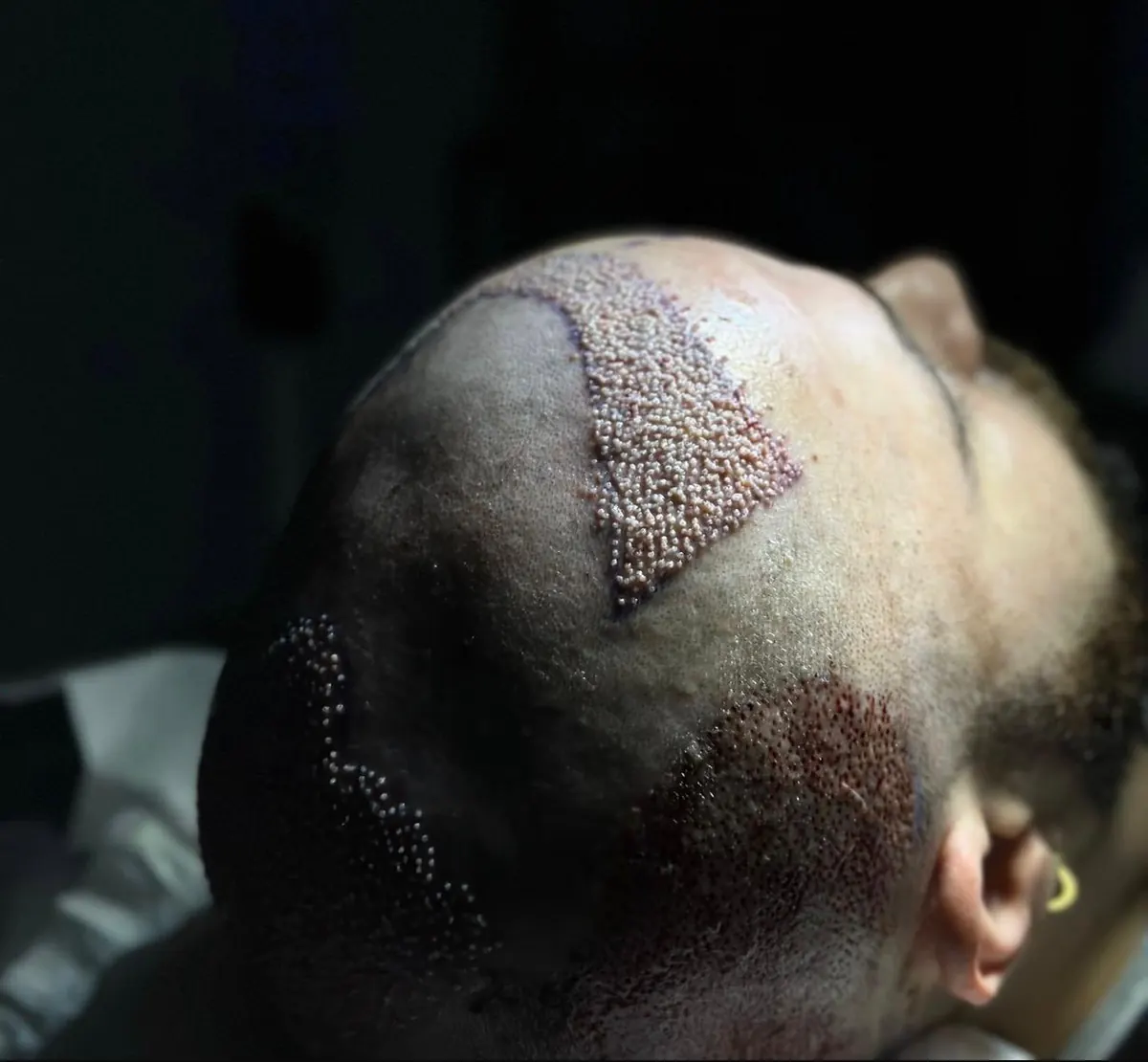
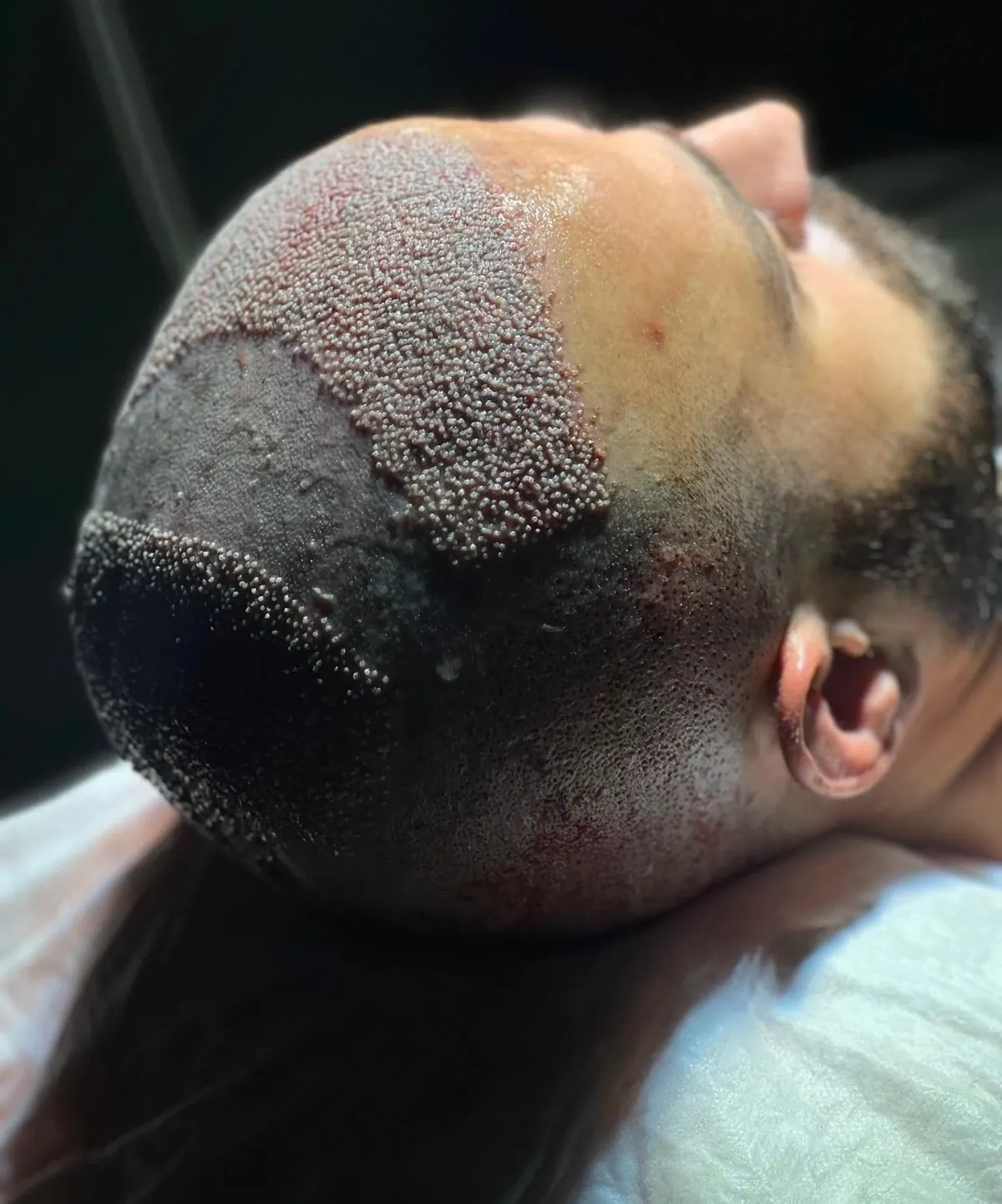
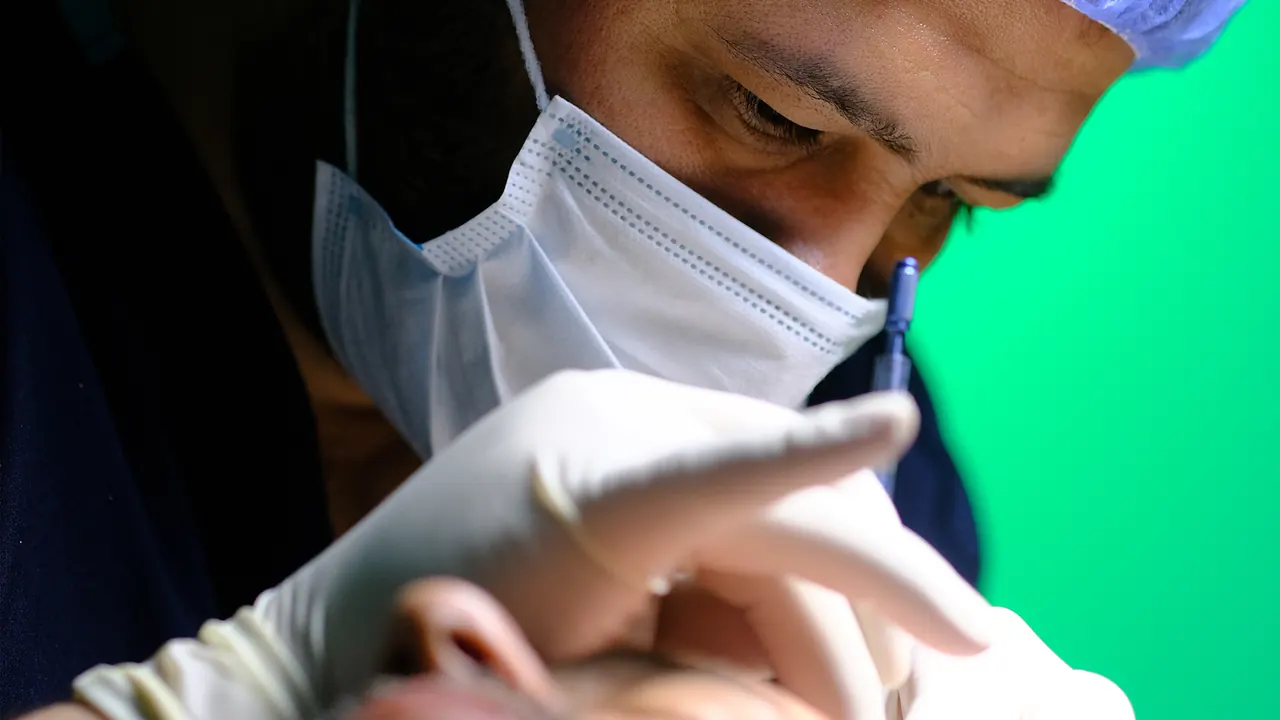
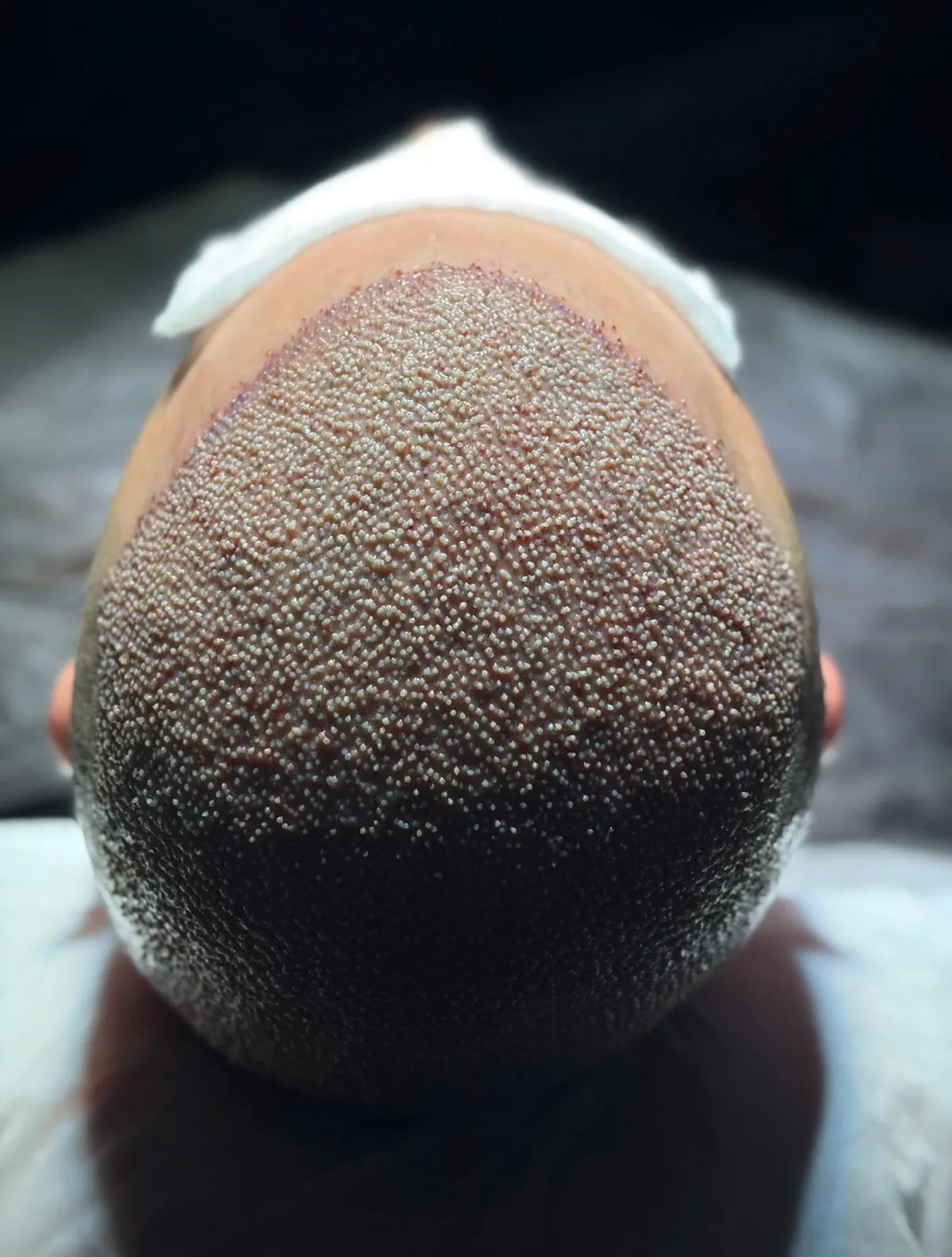
With sapphire FUE, the surgeon opens channels with fine sapphire blades before any graft is placed. Each channel sets the direction and angle of one hair. At the crown, the channels have to radiate out from the whorl in a spiral and blend into the existing hair around it. Dr. Harun Alakaya opens the channels himself, so this direction work stays in the surgeon's hands. DHI with a Choi implanter pen can also be used, especially where native hair is still present between thin spots.
A soft, gradual edge matters at the crown. It helps the result look natural from behind, and it still looks natural if the hair around it thins later.
Crown hair transplant growth timeline
| Time after surgery | What usually happens |
|---|---|
| Days 1–14 | Small scabs form and usually fall off within 10–14 days. |
| Weeks 2–8 | Shock loss: most transplanted hairs shed. This is normal. |
| Months 3–4 | First fine hairs appear. The crown is often a little behind the front. |
| Months 6–9 | Coverage builds and hairs thicken. |
| Month 12 | The front is usually close to its final look. The crown is still improving. |
| Months 12–18 | The crown reaches its final result. |
The NHS gives 10 to 18 months for the full result of a hair transplant. The crown is usually at the slower end of that range, so judge it at 12 months at the earliest. Timing varies between patients.
Aftercare for a crown transplant
- Sleeping: the crown is the part that touches the pillow when you lie on your back. Follow your clinic's advice on sleeping position in the first nights; many patients use a travel neck pillow so the crown does not rub. Take care with car and plane headrests too, which can press on the same spot.
- Hats: avoid caps that press on the crown until your doctor allows a loose one.
- Sun: the crown faces the sun directly. Protect it in the first months once covering is allowed.
- Washing: follow the washing routine you are given and do not pick the scabs.
Contact your doctor if you have fever, spreading redness, pus, severe pain or bleeding that does not stop.
Protecting your crown result
Transplanted hair comes from the donor area and usually resists pattern hair loss. The native hair around it does not. If that hair keeps thinning, the transplanted area can look like an island. The IAHRS notes that doctors almost always ask their patients to use medical therapy to help prevent further crown loss.
Finasteride and minoxidil are the most common medical treatments. They need a doctor's prescription and supervision, and they only work for as long as you keep using them. Read more in our guide to finasteride and minoxidil.
If you are not sure whether your crown is ready for surgery, you can send photos of your crown and hairline for a free analysis. Dr. Alakaya plans each case himself and will tell you if medical treatment or waiting is the better first step.
Frequently asked questions
Is a crown hair transplant worth it?
It can be, for patients with stable or treated hair loss and a good donor area. If the bald spot is still expanding quickly, starting with medical treatment is often the safer plan.
Why does the crown take longer to grow?
Crown results commonly mature more slowly than the front. Many patients see the final crown result between 12 and 18 months after surgery.
Can the front and crown be done in one session?
Sometimes, if the donor area can supply enough grafts for both and still keep a reserve. Otherwise the front is usually done first and the crown in a later session.
Will a crown transplant look natural?
It can, when the grafts follow the natural spiral and blend into the surrounding hair. Crown density usually looks a little lighter than the front.
Can I have a crown transplant without taking medication?
Yes, but the native hair around the transplant may keep thinning and leave a gap. Discuss medical options with your doctor before surgery.
Sources
- IAHRS – Crown Hair Transplants
- NHS – Hair transplant
- American Academy of Dermatology – A hair transplant can give you permanent, natural-looking results
- British Association of Dermatologists – Hair loss male pattern (androgenetic alopecia)
- DermNet – Male pattern hair loss

Our articles explain hair transplant topics in plain language. They are general information and do not replace a consultation with a doctor.
About the doctor