Sapphire FUE vs DHI: the quick decision
Pick the method that fits your hair loss, your hair type and how visible the first two weeks can be for you. Both methods use the same FUE extraction from the donor area. They differ in how the new sites are made and how the grafts go in. A DHI hair transplant places each graft with an implanter pen. A sapphire FUE hair transplant opens all channels first with a sapphire blade, and then the team places the grafts.
Use this table as a first filter. Your surgeon makes the final call after examining your scalp.
| Your situation | Usual first choice | Main reason |
|---|---|---|
| New or lower hairline | DHI, or DHI with sapphire FUE behind it | Close control of angle and depth on the front row |
| More density between existing hair | DHI | Less disturbance to the hair already there |
| Large area, Norwood 4 to 6 | Sapphire FUE, often with DHI at the front | Faster for high graft numbers; the whole area is planned at once |
| You do not want to shave | Unshaven DHI | Grafts go between long hair; suits small to medium sessions |
| Afro or tightly curled hair | Either, chosen case by case | Careful extraction matters more than the implantation tool |
| Tight budget | Sapphire FUE | Often costs less; healing time is similar |
The sections below explain each row, so you can understand why a plan was suggested to you.
The difference between sapphire FUE and DHI in one minute
Every FUE hair transplant has two halves. First, the surgeon removes follicular units, called grafts, from the back and sides of the head with a tiny round punch. Each graft holds one to four hairs. Second, the grafts go into the thinning area. Only this second half differs between the two methods.
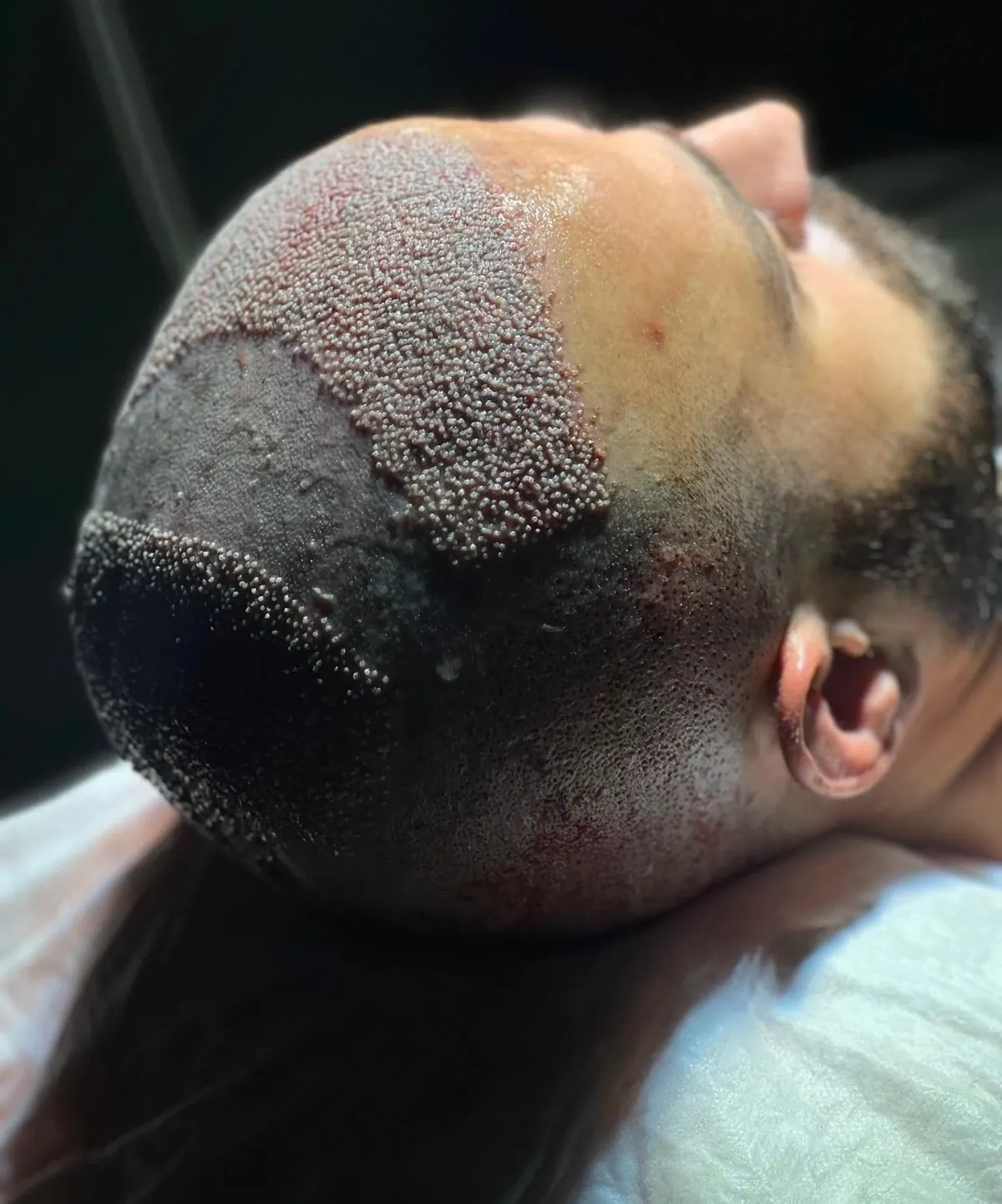
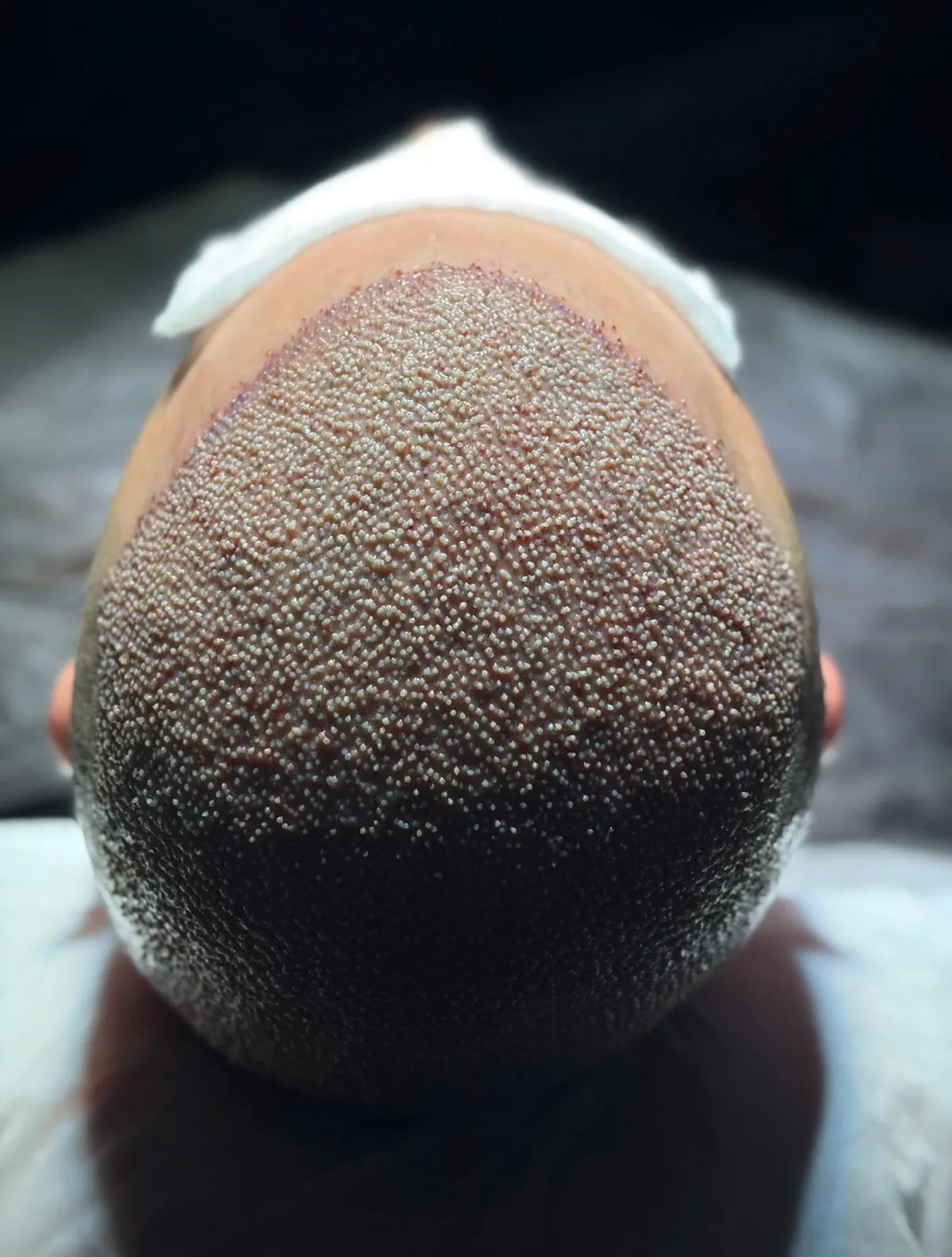
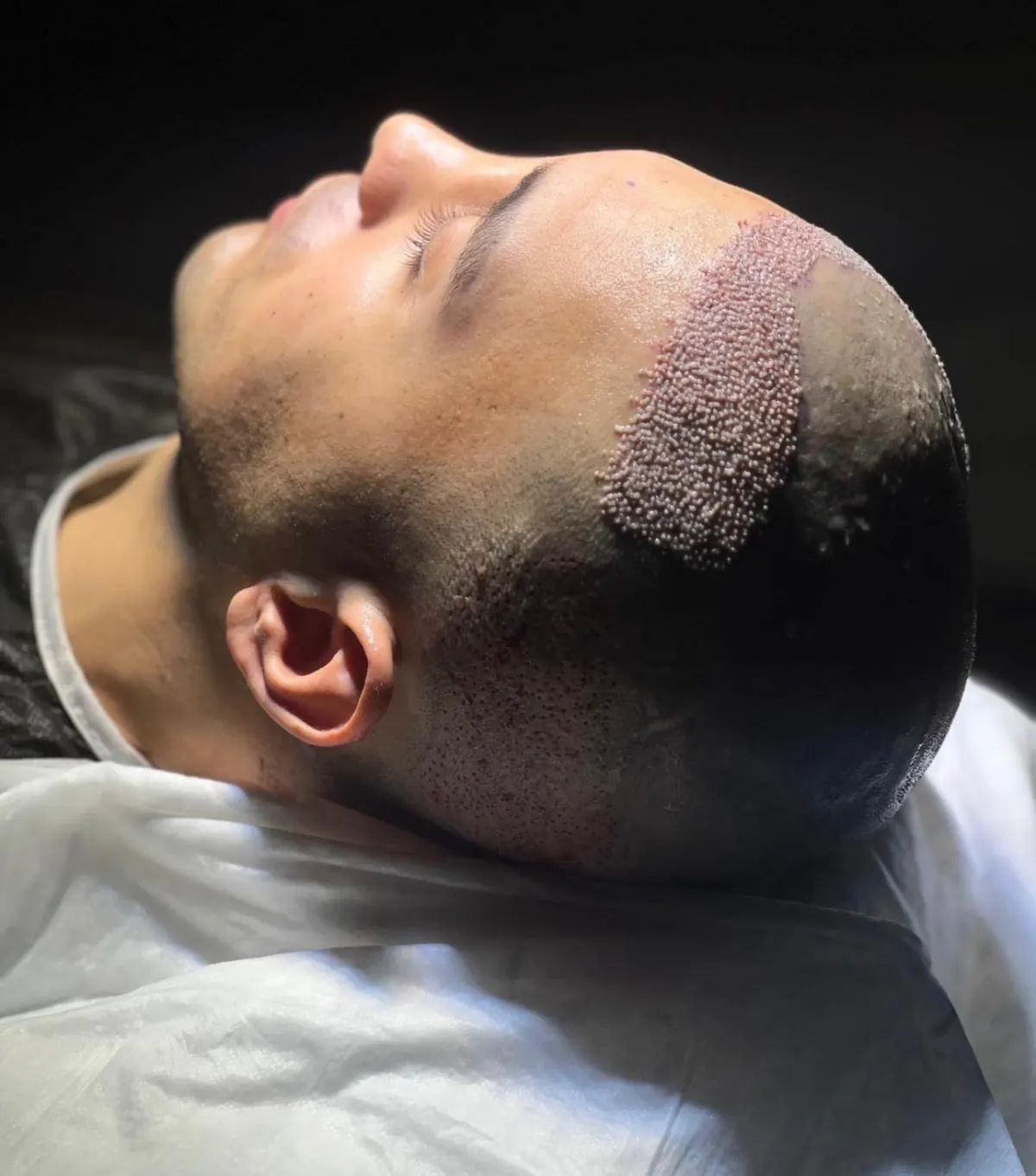
- Sapphire FUE: the surgeon opens small channels with a blade made of synthetic sapphire crystal. Sapphire blades are sharp and smooth and make fine V-shaped incisions. The team then places the grafts with fine forceps.
- DHI: each graft is loaded into a Choi implanter pen, a hollow needle on a pen-shaped handle. The pen makes the site and places the graft in one move.
The people using a method matter more than its name. Graft survival depends on gentle extraction, keeping grafts moist and cool, and a short time outside the body. There is little good-quality research that compares blade types and implantation tools head to head. Treat any claim that one method always gives better growth with caution.
If you want a new or lower hairline
The hairline is the part people notice first. It needs single-hair grafts in the front row, a slightly irregular edge and hairs that leave the skin at a low, forward angle. DHI is often chosen here, because the implanter pen allows close control of the angle and depth of each graft. Fine sapphire blades can also make low-angle channels, so a skilled surgeon can build a natural hairline with either tool.
Ask how the hairline position was chosen. A hairline that suits you at 25 should still suit you at 50. A lower, flatter line uses many more grafts and leaves less donor hair for later. The hand-drawn design and the angle of each site matter more than the method.
Usual choice: DHI for the front row, or DHI at the hairline with sapphire FUE behind it.
If you want more density between existing hair
Many patients are not bald. They have thinning hair on top and want it fuller. Here the existing hair must be protected. Opening many channels in an area with native hair can damage some of those follicles. It can also trigger temporary shedding of the hair around the grafts, known as shock loss.
DHI is often chosen for this situation. The implanter places each graft between existing hairs with less disturbance to the hair around it. The surgeon can follow the direction of the native hair as each graft goes in.
Be realistic about density. A transplant adds hair to the area, but the native hair may keep thinning over the years. Medical therapy such as finasteride or minoxidil is often discussed alongside surgery. A doctor must decide whether these medicines suit you and supervise their use.
Usual choice: DHI, sometimes unshaven.
If you need a large session (Norwood 4 to 6)
When the front, mid-scalp and crown all need work, the plan calls for a high graft number. Sapphire FUE is often the practical choice here. Opening all the channels first lets the surgeon set the density and direction across the whole area before a single graft goes in. The team can then place a large number of grafts in one day.
DHI can cover large areas too, but it takes more time per graft, so a very large DHI-only session takes longer. For very large cases a mixed plan is common, with DHI at the hairline and sapphire FUE behind it.
In large cases the donor area sets the limit, whatever the method. Most people have roughly 4,000–6,000 grafts available over a lifetime. Read how many grafts you need to see how the number is worked out and why some cases are split into two sessions.
Usual choice: sapphire FUE, often combined with DHI at the front.
If you do not want to shave: unshaven DHI
An unshaven hair transplant keeps your existing hair long, so the work is hard to see in the first weeks. DHI suits this well, because the implanter can place grafts between long hairs without shaving the recipient area.
There are limits. Unshaven work is slower and more demanding for the team. A study on no-shave long hair FUE described the method as time-consuming and technically challenging. For that reason, unshaven plans usually suit small to medium graft numbers. The donor area may still need a small shaved strip that sits under longer hair, depending on the method and your hair length.
Usual choice: unshaven DHI for hairline or density work; a shaved session for large areas.
If you have afro or tightly curled hair
Afro hair has curved follicles under the skin. This raises the risk of transection, which means cutting the follicle during extraction. So the first priority is the extraction technique and the surgeon's experience with curly hair. The choice between sapphire FUE and DHI comes second.
Both implantation methods can work, as long as the channel or needle size fits the curved graft. Curly hair also covers more scalp per graft, so the same look can often be reached with fewer grafts. Tell your doctor if you have had keloid scars or bumps on the back of the neck, as this affects planning. Our afro hair transplant page explains the details.
Usual choice: decided case by case, often after a small test extraction to see how the follicles come out.
If budget or time off is the deciding factor
At many clinics, DHI costs more than sapphire FUE. It takes more time per graft, and implanter pens add to the cost of supplies. Unshaven work usually costs more again, because it is slower. See how fixed-price packages work on our hair transplant cost in Turkey page.
Time off is similar for both methods. Small scabs usually fall off in 10–14 days, and most people return to desk work in 3–5 days. Shock loss usually happens between 2 and 8 weeks. New growth usually starts at 3–4 months, and the final result is seen at around 12 months, or up to 18 months for the crown. With a shaved recipient area the healing is more visible. With unshaven DHI it is partly hidden by your own hair.
Choose by fit first and price second. A cheaper method that cannot cover your area is poor value. A more expensive method you do not need is also poor value.
Combining sapphire FUE and DHI in one plan
Many surgeons use both methods in one operation. A common plan uses DHI on the front hairline, where angle control matters most. Sapphire FUE then covers the mid-scalp and crown, where large numbers of grafts are needed. This mix can balance detail, density and session length.
If you are offered a combined plan, ask which areas get which method, and why. A clear answer shows that the plan was made for your scalp.
Questions to settle before you choose sapphire FUE or DHI
- How many grafts does my pattern need, and how many can my donor area safely give?
- Which areas get sapphire FUE, which get DHI, and why?
- Do I need to shave, and what will I look like in the first two weeks?
- Who opens the sites, with a blade or an implanter pen, and who places the grafts?
- What is included in the price, and is it fixed?
Our guide on how to choose a hair transplant surgeon explains why these answers matter. Dr. Harun Alakaya plans each case himself and designs the hairline by hand. He chooses sapphire FUE, DHI or a mix after he examines your donor area and hair type. If you would like his view on your case, you can send your photos for a free analysis.
Frequently asked questions
Is DHI better than sapphire FUE?
Neither method is better for everyone. DHI usually suits hairline work, density between existing hair and unshaven plans, while sapphire FUE usually suits large areas and high graft numbers.
Is DHI more painful than sapphire FUE?
Both are done under local anaesthesia, and most patients feel only the anaesthetic injections. The discomfort during healing is similar for both.
Do I need to shave the donor area for DHI?
Often the donor area is shaved or partly shaved, because the punch works most accurately on short hair. Extraction from long, unshaven hair is possible, but it is slower and usually suits smaller sessions.
Which method is better for repairing an earlier transplant?
Repair work often uses DHI or a mix, because it involves small areas, scar tissue and hair that was transplanted before. The surgeon first checks how much donor hair is left, and that decides what is possible.
Does the method change how long transplanted hair lasts?
No. Transplanted hair comes from the donor area, which is usually resistant to the hormone DHT, so it tends to last with either method. Native hair around it can still thin over time.
Sources
- Clinical, Cosmetic and Investigational Dermatology – No-Shave Long Hair Follicular Unit Excision Using an All-Purpose Skin-Responsive Device (Umar et al., 2023)
- Clinical, Cosmetic and Investigational Dermatology – A Practical Guide to Hair Graft Placement Using the Sharp Implanter Method (Park et al., 2023), DOAJ record
- StatPearls (NCBI Bookshelf) – Hair Transplantation (Goldin, Zito, Raggio)
- ISHRS – Before You Choose a Surgeon
Our articles explain hair transplant topics in plain language. They are general information and do not replace a consultation with a doctor.
About the doctor